
U.S. identifies likely successor
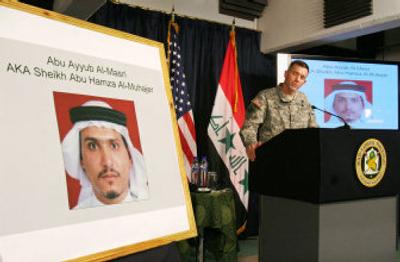
BAGHDAD, Iraq – The U.S. military released new information Thursday about the Egyptian militant it believes has taken the place of Abu Musab al-Zarqawi as the new head of al-Qaida in Iraq.
At a news briefing in the Iraqi capital, the U.S. military showed reporters a previously classified picture of the Egyptian-born bomb expert who goes by Abu Ayyub Masri or Sheikh Abu Hamza Muhajir.
“It’s important for the people of Iraq to know who this is,” said Maj. Gen. William Caldwell IV, a spokesman for U.S.-led forces in Iraq.
Caldwell said U.S. officials debated for days about whether releasing the photo and a brief biographical sketch would bolster his media profile, and play into his hands. “Our intention is not to glorify him,” he said.
The U.S. intention instead appears to be to focus attention on the foreign element of Iraq’s insurgency. Masri and Muhajir mean “Egyptian” and “immigrant” in Arabic.
Masri began his journey in Islamist circles in 1982 as a disciple of Ayman Zawahiri, the Egyptian physician who now is a deputy to Osama bin Laden, said Caldwell, citing information held by the Defense Intelligence Agency.
He went to Taliban-ruled Afghanistan in 1999, where he trained at the bin Laden’s Farouk camp and met al-Zarqawi. After the 2001 U.S. invasion of Afghanistan, he made his way to Iraq.
During the first year of the insurgency, Masri helped draw other insurgent groups into al-Qaida’s fold and worked with al-Zarqawi’s deputies in Fallujah, directing suicide bombers and car bombs to other parts of the country, the military said.
Iraqi’s national security adviser, Mowafaq Rubaie, a Shiite, released a purported al-Qaida memo that said insurgents were having trouble holding their own and aimed to spark a war between Iran and the United States as a way to distract Americans.
Caldwell told reporters the document, discovered at an al-Zarqawi safe house before last week’s bombing, appeared authentic.
But its rhetoric and tactics differed markedly from previous al-Qaida documents or public communications and appeared to reflect the allegations against the insurgency often made by Shiite government officials.
Calm prevailed through much of Baghdad Thursday, which is under a new security plan and a 9 p.m. curfew, but at least 18 Iraqis were killed elsewhere Thursday, and seven bodies were discovered.