
Somali Islamists deliver calm
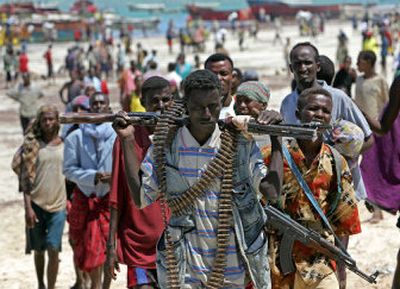

MOGADISHU, Somalia – The thugs manning the roadblocks are gone. The warlords are on the run. And the guns in a city long regarded as among the world’s most heavily armed have fallen silent. Most, in fact, have disappeared from view.
Since Islamic militias took control of this city last week, U.S. and other Western officials have worried that Mogadishu’s new leaders would impose a severe, Taliban-style government and harbor terrorists. But after 15 years of deadly chaos, residents interviewed here expressed nothing short of jubilation that somebody has made their city safe, and that for now, the daily crackle of gunfire is finally gone.
“Our ears are resting now,” said Diiriye Jimcaale, 45, who has been unemployed since the onset of interclan warfare forced him to close his small clothing shop in 1991. “Now we hear nothing.”
Anxiety remains, both about the militias’ ability to maintain order and about the possibility that extremist elements within the movement will go too far in imposing Islamic rule. Residents speak of a wave of cinema closings in the first days after the militias took control of the city June 5. Rumors have circulated that public showings of the televised World Cup soccer tournament would be banned.
But on this Friday night in Mogadishu, sounds of the match between the Netherlands and Ivory Coast floated through the city. The streets bustled with activity. The city’s largest market, near the site where two U.S. helicopters crashed in 1993, as depicted in the movie “Black Hawk Down,” hummed with business.
Cab driver Yusuf Ali Muhammed, 39, felt so safe that he left his longtime bodyguard at home, saving himself $5 in security fees, he said. Wielding an AK-47 rifle, as his guard did each night as they drove through the city, is now prohibited. Yet even without it, Muhammed said that he could now go anywhere in the city at any time. Before, he used to stick to the few neighborhoods he knew best.
“This is my mobile,” Muhammed said, smiling as he held up a glowing Nokia handset. “If I’m called, straight I go – without a gun.”
Mogadishu, the oceanside Somali capital with a population of more than 1 million, remains an impoverished, devastated city of cracked pavement and ruined buildings. After the fall of dictator Mohamed Siad Barre in 1991, the city’s warlords began fighting one another, creating a humanitarian disaster. With United Nations authority, the United States and other countries intervened militarily in 1992, but continuing violence led them to abandon it to its anarchy three years later.
Somalia became one of the world’s most profoundly failed states, without a central government, public schools, a police force, a national army or laws.
Warlords set up roadblocks throughout the city to exact tolls. Murders, robberies, rapes and kidnappings became endemic. Every family of consequence and every major business armed its own militia, which traveled the city flanked by pickup trucks mounted with antiaircraft guns. Pirates on speedboats hounded ships near the city’s ports.
Out of this chaos grew the Islamic courts that now rule Mogadishu. They started as neighborhood tribunals that doled out often-harsh punishments but began to calm the city’s notoriously rampant crime.
As a semblance of order took hold, residents said, the courts grew in popularity and political clout, even among moderate Muslims wary of strict Islamic law.
“When you are really sick, you’ll try any kind of medicine,” Ali Hussein Maalin, 56, a Somali businessman, said in an interview in Nairobi. “We have been sick for 15 years.”
The courts expanded into Islamic militias strong enough to challenge the city’s secular warlords, which had enjoyed the financial backing of the CIA, according to widely circulating reports. The United States has neither confirmed nor denied these accounts but has acknowledged supporting the warlords as part of an effort to capture terrorists suspected in a string of attacks in East Africa, including the bombings of U.S. embassies in 1998.
A series of clashes this year between the Islamic militias and the warlords left more than 300 people dead. But the militias have expanded their control to nearly all of southern Somalia.
So far, the militias have not moved into the town of Baidoa, where Somalia’s transitional government is based. The government was created by a U.N.-backed conference in Nairobi and has little authority in Somalia.
Leaders of the Islamic militias have said repeatedly that they intend to negotiate with the government so that it could eventually move into Mogadishu and reunite the country. They also have said they will disarm their own militia, turn over any terrorists and not resort to extremist Islam.
“The only thing we would concentrate on is to bring peace and stability to this region,” Abdulkadir Ali Omar, the second-in-command of the Islamic militia, told reporters here.