
Family protests dress code
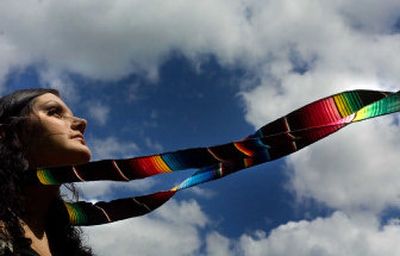
The family of a Medical Lake High School student is fired up over a graduation policy that prevented their daughter from wearing a cultural sash she earned for getting good grades.
Michelle Ontiveros, 18, and another Hispanic student at the school were denied the opportunity to wear a sash resembling a serape during the ceremonies June 10 because of a school policy that does not allow deviation from the standard cap, gown, tassel and honor cords for those who qualified. A Native American student was denied a similar request last year.
“It’s like the school is just saying, ‘This is what we produced,’ as opposed to allowing the students to say who they are, celebrate who we are,” Ontiveros said. “I was really disappointed.”
The colorful sashes are awarded each year by the Hispanic Business Professional Association as a symbol of academic success by minority students.
School district officials said Ontiveros and another student came forward at the last minute and asked to wear the sash at this year’s graduation ceremonies.
Because of the short notice, Principal Scott Blasingame told the students nothing could be done to change a policy put in place years ago. “There was a problem in the past; there were some things that didn’t look appropriate,” Blasingame said.
Students are not allowed to wear jewelry or flip flops, and they are reminded of the dress code multiple times before the ceremony, he said.
Honor students are allowed to wear yellow cords, and a silver cord is worn by students who pass all parts of the WASL.
“I always want to honor and respect all the patrons of the district, and I truly respect diversity and honoring people’s cultural heritages,” Blasingame said. “But I want to have something that is well thought out, so if we do make some adjustments, it will work for everybody.”
In an effort to increase graduation rates for ethnic populations, the nonprofit HBPA awards certificates and the cultural sashes to Spokane-area Hispanic high school and college students each year during a special ceremony.
Students with a grade point average of 3.0 or higher are invited to attend with their families to recognize educational success.
“We’ve been doing this for 11 years, but this was the first year that I know of that we had an incident,” said Joni Riojas Hubbard, the president of the association.
Riojas Hubbard said students are told at the event to wear the sashes at their own high school and college graduations as a “symbol of pride.”
Similar cultural adornments are awarded to black and Native American students each year by various organizations.
Spokane Public Schools allows the wearing of the cultural symbols during ceremonies, as long as students get permission first.
“We don’t want students wearing things to the ceremony that are disruptive, so we ask them to coordinate with their principals,” said David Beil, district spokesman.
The Ontiveros family said they tried that approach in Medical Lake but became frustrated by the principal’s position not to deviate from school policy.
They contacted HBPA officials for help, and they sent a letter to the principal and the state Human Rights Commission.
The state Hispanic Affairs commissioner, Yvonne Lopez-Morton, also met with the principal over the issue.
“There are definitely struggles for students of color, and it’s such a powerful message when they succeed because they send that message – ‘I did it and so can you’ – to other students,” Lopez-Morton said. “But for these students, on a day that should have been one of the most important days, this put a sad note on it.”
Although he did not allow the sashes this year, Blasingame said district officials agreed to meet with the parents and convene a committee to look at changing the policy for the future.
Michelle Ontiveros and her father, Ruben, agreed to be on that committee.
“I feel that the kids who have gone through 12 years of education, it should be their moment – not the school’s moment,” said Ruben Ontiveros. “They should be allowed to celebrate their diversity.”