
U.S. says Iranian support for Iraqi extremists is up
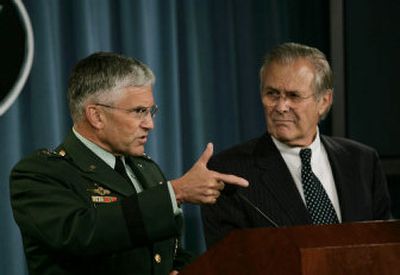

WASHINGTON – Iranian support for extremists inside Iraq has shown a “noticeable increase” this year, with Tehran’s special forces providing weapons and bomb training to anti-U.S. groups, the top U.S. commander in Iraq said Thursday.
Other U.S. officials have complained about Iranian meddling in Iraq, but the criticism of Tehran by Army Gen. George Casey was the most direct and explicit so far. Speaking at a Pentagon news conference, the general listed Iranian influence as one of the four major problems he faces in Iraq.
“We are quite confident that the Iranians, through their covert special operations forces, are providing weapons, IED technology and training to Shi’a extremist groups in Iraq, the training being conducted in Iran and in some cases probably in Lebanon through their surrogates,” Casey said, using the military abbreviation for “improvised explosive devices,” or roadside bombs. “They are … using surrogates to conduct terrorist operations in Iraq, both against us and against the Iraqi people.”
Iran’s actions are a major concern not only because of attacks on U.S. forces, but because the durability of the new Iraqi government depends in part on the willingness of Iraqi’s Sunni minority to accept the government. They will be unlikely to do so if the Iranian government is perceived as playing a major role in supporting and even arming violent Shiite factions.
“Since January, we have seen an upsurge in their support, particularly to the Shi’a extremist groups,” Casey said. “They are providing weapons, training and equipment to Shi’a insurgents, and that equipment is being used against us and Iraqis.”
In the wide-ranging news conference, Casey also touched on several other aspects of the three-year-old U.S. war in Iraq. He said that insurgent attacks are up, but insisted that “the insurgency hasn’t expanded.” About 90 percent of its attacks are launched within 30 miles of Baghdad, he said.
Discussing the state of al-Qaida in Iraq in the wake of the killing earlier this month of its leader, Abu Musab Al-Zarqawi, Casey said, “They’re hurt, but they’re not finished.”
Casey expressed confidence in the growing strength of the Iraqi army but voiced concern about the state of the Iraqi police, especially in the Baghdad area, where, he said, their operations are influenced by militias.