
Kuwait election making history
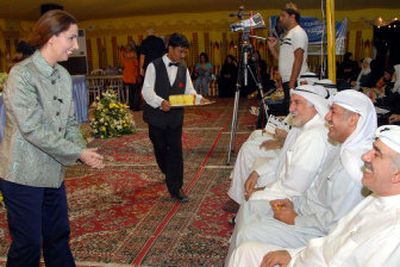
KUWAIT CITY – Rula Dashti didn’t begin the fight for women’s suffrage in Kuwait, but she has emerged as its most powerful symbol.
Dashti challenged her country’s election laws in a court battle that helped spur the Kuwaiti government to grant full political rights to women last year. Today, she and 27 other women will make history as female candidates in the first election in which women here are allowed to vote.
Political analysts doubt that any of the women will win seats in the 50-member legislature. The women had only five weeks to campaign since the Kuwaiti emir, Sheikh Sabah al Ahmed al-Sabah, dissolved the parliament on May 21 in a dispute over electoral reforms and moved up the vote for a new one by a year.
But Kuwait’s decision turned women into a key constituency. Of Kuwait’s 340,000 eligible voters, 57 percent are women, partly because military personnel, nearly all male, are barred from voting. In nearly every one of the 25 districts, women outnumber men, though Dashti’s opponents are quick to point out that numbers alone don’t ensure a woman will make it to the legislature.
“Most of the women’s votes will go to male candidates because they are not convinced by the female candidates,” said Walid Tabtabai, an Islamist incumbent candidate who opposes women seeking office on religious grounds.
But Dashti’s path to the polls is a compelling story of a singular Arab woman fighting against entrenched interests and traditions. Reform has been slow throughout the conservative, oil-rich monarchies of the Persian Gulf, and the backlash has been vicious since Dashti announced her candidacy.
Detractors spread text messages ridiculing her Lebanese accent and Persian ancestry. Gossips whispered that the Bush administration was bankrolling her. Vandals tore down her campaign posters. Islamist hardliners lambasted her for refusing to wear a veil.
“If I put the veil on today, I know I could get 600 or 700 more votes,” she said. “But I won’t. I respect my religion, and I won’t use it as a political tool.”
Dashti is hardly representative of most Kuwaiti women: Her mother is Lebanese, her father, a former Kuwaiti legislator. She holds a bachelor’s degree from California State University, Chico, a master’s from California State University, Sacramento, and a doctorate from Johns Hopkins University. At 42, she’s “single and happy,” though she adds, “My mother doesn’t need to hear that.”