
Bombings in Iraq kill at least 60
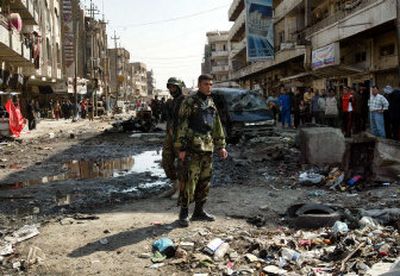
BAGHDAD, Iraq – A surge of bombings in Baghdad on Tuesday killed at least 60 people as the sectarian tensions stirred by last week’s attack on a major Shiite shrine showed no sign of abating.
The renewed bloodshed a day after a daytime curfew in the capital was lifted prompted President Bush to appeal again to Iraqis to exercise restraint and not allow their country to be pushed toward civil war.
“Obviously there are some who are trying to sow the seeds of sectarian violence,” Bush said in Washington. “And now the people of Iraq and their leaders must make a choice. The choice is chaos or unity.”
Most of the victims Tuesday were Shiites targeted by a series of five midday blasts in Shiite neighborhoods, including New Baghdad, where a man detonated his explosives vest at a crowded gas station, killing 23, and Karradah, where a car bomb killed six at a small market opposite a Shiite mosque.
But there also were more attacks against Sunni targets, including a bombing that damaged the Hussein al-Majid mosque in Tikrit where Saddam Hussein’s father is buried.
An early-morning bombing damaged a Sunni mosque in the mixed Hurriyah neighborhood, reportedly killing three, and a car bomb exploded early in the evening at a Shiite mosque in the same neighborhood, killing at least 23 people.
Elsewhere Tuesday, two British soldiers were killed in Amarah, 180 miles south of Baghdad, the Defense Ministry reported in London. And an American soldier was killed by small-arms fire Monday west of Baghdad.
The tit-for-tat sectarian attacks have left hundreds of people dead nationwide since the Feb. 22 attack on the Askariya shrine in Samarra.
According to statistics released by Iraq’s government, 379 people had been killed through 4 p.m. Tuesday, and an official at Baghdad’s morgue said at least 248 of those were killed in the capital through Monday.
The reports contradicted a Washington Post report that about 1,300 people have been killed in the days of bloodletting that followed the bombing of the shrine in Samarra. A Cabinet statement said that “what was reported in a foreign newspaper were inaccurate and exaggerated numbers of victims.”