
Project Access enables cancer treatment
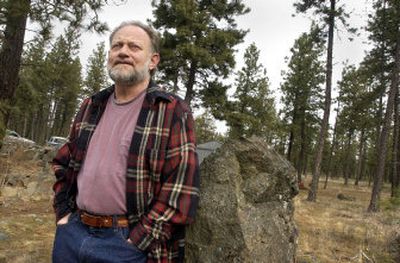

A lot of guys wouldn’t want to have their radical prostate surgery discussed in the newspaper, but Cary Abbott doesn’t mind as long as the publicity helps Project Access, the program he credits with saving his life.
“These guys did me a heck of a favor,” Abbott said, “and anything I can do to return the favor. …”
Even if he could have afforded health insurance, which he couldn’t, the part-time groundskeeper at Spokane Community College didn’t have a doctor. He never really needed one before.
But last March, cancer-awareness month, the 54-year-old Abbott was told he had better get a colonoscopy. He said Sacred Heart Medical Center required that he be referred by a primary-care provider, but a doctor he found in the Yellow Pages wanted $1,500 for an exam.
After his sister directed him to the Community Health Association of Spokane, Abbott got a thorough going-over at the CHAS Maple Street Clinic. A blood test showed an elevated prostate-specific antigen, a possible indicator of cancer. His father and grandfather both had prostate cancer. Abbott needed a biopsy.
Abbott was referred to Project Access to arrange to see a urologist.
Project Access is a volunteer network of physicians, hospitals and other health care providers who offer their services for free to low-income, uninsured people in Spokane County. The project, founded by Dr. Sam Selinger, accepted its first patient on Sept. 2, 2003.
Funded by donations, including contributions from Spokane County and its cities, it is the community’s response to a health care crisis gripping the nation. The United States has 45 million uninsured citizens, including 45,000 in Spokane County.
“The amazing thing about Project Access,” said its director, John Driscoll, “is that 80 percent of Spokane doctors have agreed to be part of it.” The hospitals, Inland Imaging, Pathology Associates Medical Laboratories and many other ancillary providers are all part of the network.
More than 800 people – mostly working poor – are enrolled in the program, which has provided more than $5.5 million in charity medical care through 2005. Because Spokane already offers 11 primary clinics for low-income patients, the most significant aspect of Project Access is in providing specialty care to the poor.
Before Project Access, primary care physicians had to cash in their chips with specialists to get them to see an uninsured patient, Driscoll said.
“I figured I would get bargain-basement treatment,” Abbott said.
That was not the case.
Project Access referred Abbott to Dr. Nick Fairchild, a urologist and president of the Spokane County Medical Society, who diagnosed Abbott’s prostate cancer and then offered his new patient every health care option available.
With Project Access, there is “one standard of care,” Fairchild said, not a two-tiered system based on socioeconomics or what insurance the patient has. “The nice thing about Project Access is that we don’t have to worry about financial concerns. We have already decided to forgive payment.”
Fairchild said the treatment of prostate cancer is all about choices and informing the patient about those choices. Abbott could have had one of several types of radiation treatment or surgeries. He chose robotic surgery, performed by Fairchild at Sacred Heart Medical Center.
“I didn’t want to go back again, so I told him to take that puppy out,” Abbott said.
Later Abbott was referred to a gastroenterologist who found colon polyps, which were removed. Project Access also got him enrolled in the state’s Basic Health insurance program. He has recovered from his surgeries and is getting regular checkups.
Project Access doctors choose how many uninsured patients they can afford to see. The standard is one new uninsured patient a month. Doctors who specialize in more complex procedures, such as neurology, can afford to see fewer patients than some other specialists.
“We have to triage,” said Fairchild, citing low government reimbursement rates for health care. “If we just saw Medicaid patients, we’d go under.”
Project Access, he said, “allows us to put aside these difficult political issues” and do our best for patients.