
Animal rescue corps looks to fill ranks
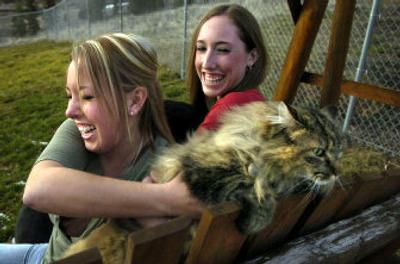
As a 2002 fire whipped up on nearby Tower Mountain, Kristin and Lauren Nooner sprang into action to save the family cows and pets.
The 14- and 12-year-old girls’ parents, at work at the time, had prepared them for what to do in case of a fire. So they carried the pets, including a mother cat and kittens, to a neighbor’s house and opened the gate to let the cows escape.
It ended well for the Nooners – their house was saved – but father Monty Nooner realizes that if the fire had destroyed their home, there might have been nowhere for their animals or their neighbors’ animals to go.
Local animal shelter and emergency management officials are working to fix that problem with the newly resuscitated Humane Evacuation and Animal Rescue Team (HEART), designed to rescue, shelter and reunite pets with owners in case of a local catastrophe such as a wildfire or ice storm.
Shelter officials are hoping animal lovers will turn out Wednesday evening for an introductory HEART meeting. No animal-handling experience is necessary.
In addition to actual rescue operations and other animal-handling tasks, volunteers are needed to answer phones, take pictures of animals, prepare animal meals and wash dishes.
And because only a third of volunteers are typically available in times of emergency, HEART needs to train about 150 volunteers, said Dick Green, emergency services program manager for the American Humane Society and board president for the Spokane Humane Society.
The Spokane Humane Society is taking the lead role in the project, but the Spokane County Regional Animal Protection Service (SCRAPS) and SpokAnimal C.A.R.E. are also involved.
During the 1996 ice storm, SCRAPS Director Nancy Hill said she and other animal control officers had to rescue many animals.
“People had gone to work and left their dogs chained up, and they were like icicles,” Hill said.
Those who are home at the time of a disaster may be reluctant to leave animals behind.
“What we’re learning from hurricanes Katrina and Rita is that animal issues are a human issue,” said Green.
Green led efforts last year to rescue animals in the wake of Hurricane Katrina, where he found many people also required rescuing because they refused to evacuate without their pets.
A key HEART goal is to find ways to keep people and pets together.
“We’re trying to co-locate to where people can shelter their animals within close proximity to where the people will be,” said Spokane County sheriff’s Deputy Wade Nelson, who is assigned to the county’s emergency services program.
That might mean setting up animal shelters in parking lots or on tennis courts at schools used to shelter people.
Anyone can take steps to prepare their pets for a disaster, said Spokane Humane Society Executive Director Dave Richardson. Pet owners should make sure they have 72 hours of food and water for themselves and their animals, as well as a crate or carrier if pets need to be transported. And they should keep animals’ immunizations up to date in case they are forced into a crowded situation.
Richardson said it’s essential that pets have proper identification, like a microchip, to make reuniting easier.
The Nooner family no longer lives near Tower Mountain, having moved to a housing development. But Monty Nooner said he still considers how the family would take care of its pets should an emergency strike.
He applauds HEART’s goal to organize before a local disaster.
“The time to plan isn’t the time of the fire,” he said. “That’s too chaotic a time.”