
Sandpoint march marks meth’s toll
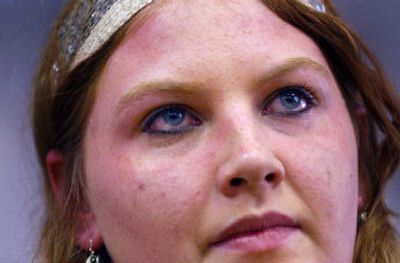

Cecilia Cecil could be the poster child for the anti-meth movement.
The North Idaho teen said she grew up with methamphetamine, saw it firsthand in her home. Cecil said she once pretended to be asleep so she wouldn’t have to decline a relative’s offer of the highly addictive drug.
But she did get hooked. “I was addicted for two years,” the 17-year-old told a crowd of about 150 in Sandpoint on Wednesday.
She was one of the speakers at March Against Meth, an event organized by Lake Pend Oreille High, the local alternative school.
Sometime last year, veteran teacher Mona Stafford was looking at pictures of former students. Some are meth users who have lost custody of their children. Some are addicts who no longer even recognize her. Stafford said she realized she had to do something.
She wants people to start talking about the problem in Sandpoint – “and what it’s doing to our community,” she said.
She hopes the march is the first step.
In the state’s five northern counties, 832 adults and 143 juveniles were arrested for using illegal drugs in 2004, the latest year that statistics are available from Idaho State Police. Meth is increasingly popular in these counties and across the nation. An estimated 1.5 million Americans are regular meth users.
“We know kids in school are using,” Stafford said.
If you ask Nicole Love, 16, kids in school talk a lot about drugs: who’s doing them, who’s on probation for doing them. Love said the march is a reminder why she quit meth a year and a half ago, after doing it for six months. She said she loved it at first because it made her happy. But then her lows were lower than they had been before, and she felt she had to use meth to feel good.
“It’s not a life,” Love said.
She said her father was a user and went to prison for killing someone while he was high. He died while incarcerated, she said. Love was 10.
Now she has a 6-month-old son and knows his life would be ruined if she used drugs. That, she said, “keeps me clean and free.”
Love walked with the crowd along the Long Bridge, holding a sign: “Meth. Taking lives since 1945.”
Before the march, local pediatrician Joyce Gilbert gave a presentation at the Sandpoint Community Hall about the history, characteristics and effects of meth. Because it is cheap and easy to make, meth has taken over the drug culture, Gilbert said. It is a highly addictive stimulant that affects the central nervous system. Permanent damage can be done to the brain by smoking, snorting, injecting or swallowing the drug, also known as “ice,” “crystal,” “speed” and “tina.”
Gilbert spoke about the three hallmarks of users: rotting teeth (the chemicals used to make meth destroy enamel), severe weight loss (users can go for days without eating because they’re high) and welts on the skin (users imagine bugs crawling on them, so they pick at their skin).
The consequences of meth use extend to children and public agencies. Gilbert spoke about how the public school system is strained by having to feed children who aren’t getting meals at home, care for children who come from unstable environments and teach children who likely have learning disabilities because of their exposure to the drug.
“Meth is a huge societal burden right now,” she said.
Stafford, the teacher, hopes that people concerned about the problem will offer to be foster parents and support community groups that are involved in the struggle against meth.
Cecil’s recovery has been helped along by these groups. She lives at Kinderhaven, a group foster home and emergency shelter for children. She attends Narcotics Anonymous meetings. She is involved with her school’s Idaho Drug Free Youth group.
The turning point for Cecil came Oct. 13.
“I couldn’t stand the smell or taste of it anymore,” Cecil said. “I was feeling really alone.”
When the school had the idea to organize a march, she was the first to volunteer to talk.
“I don’t think a lot of people know how bad it is,” Cecil said. She also wanted to highlight how important it is to support users who are trying to kick the habit.
“Some people don’t understand the struggle some teens have,” she said. “Some people don’t understand that there are kids recovering, and I don’t think they’re appreciated enough.”