
A matter of life and death
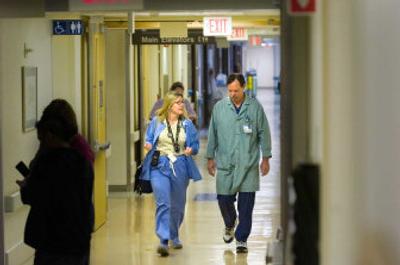
So far this year, Sacred Heart Medical Center has saved 93 lives that might have been lost were it not for rapid-response teams that have been operating at the hospital since Jan. 30.
Just two months into the program, Sacred Heart has been named a “mentor” hospital by the Institute for Healthcare Improvement’s “100,000 Lives” campaign.
Rapid-response teams consist of highly experienced critical-care nurses and respiratory therapists who can appear within minutes to provide advice for nurses at a patient’s bedside.
As a mentor hospital, Sacred Heart can be called by other “100,000 Lives” hospitals for advice about setting up similar teams. Of the 3,000 participating hospitals, about 40 are mentors, said Denise Dominik, director of performance improvement. Sacred Heart also is a mentor hospital for prevention of central line infections.
The hospital has hired 25 nurses who are solely dedicated to responding to the medical needs of patients in unstable conditions, said Pam Sheldon, rapid-response team manager.
They work 12-hour shifts, making rounds through the hospital, checking in with nursing units and advising staff on the floors. They keep track of patients they have responded to and follow patients whose conditions may have required that they be moved to a higher level of care.
A rapid-response team nurse can help determine whether a physician should be called but also has the ability to order treatments and exams, which other nurses cannot do without first consulting a physician.
The other half of the team, the respiratory therapist, is assigned to floors but can respond to a patient in need at a moment’s notice. The average response time of the team is two-and-a-half minutes, said Sheldon, formerly director of MedStar air ambulance in Spokane.
Though the purpose of the team is to stop a patient from going into “code,” cardiac or respiratory arrest, team members also can help add calm to the chaos when such an episode occurs.
The rapid-response concept is not new. Deaconess Medical Center has had similar teams in place since about 2000, according to Dean Hayman, manager of intensive care and cardiac care.
The critical-care nurses and respiratory therapists who make up the Deaconess teams are assigned to floors, Hayman said. They are designated as team members at the beginning of their shifts and can respond when they are needed.
The Deaconess teams are modeled after American Heart Association guidelines and report to the National Registry of Cardiopulmonary Resuscitation database.
Rapid-response teams have been well-received by direct-care nurses, who welcome the extra set of eyes on a patient, Sacred Heart officials said.
“The team is there to help coach and mentor, not to come in and take over like you would if a patient had ‘coded,’ ” said Dominik.
She said that between February 2005 and February 2006, Sacred Heart has seen a 66 percent reduction in cardiac and respiratory arrests outside of the intensive-care unit, a direct result of the rapid-response teams.
The most common reason the rapid-response teams are called is that a nurse or a family member notices “the patient doesn’t look right,” Dominik said. It typically involves a change in respiration.
“The responses we’ve had from the floor nurses just prove how worthwhile the program is,” Sheldon said. “So many nurses and managers have said, ‘I don’t know what we’d do without you.’ ”