
Lay’s wealth on display
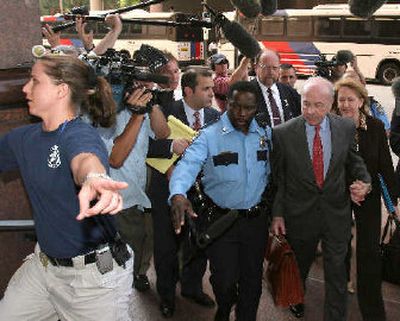
HOUSTON — On the third day of a bruising cross-examination, Kenneth Lay had his tremendous one-time wealth thrown in his face: Millions in stock accounts. Homes in Aspen. A vacation on the French Riviera and antiquing in Mallorca.
A federal prosecutor put it all before a jury Monday to show them the money the Enron Corp. founder had at his disposal to meet margin calls from banks rather than sell his Enron shares back to the company and take out more cash from Enron.
Those sellbacks did not have to be immediately disclosed to the public, and prosecutor John Hueston has suggested Lay misled employees when he told them in late 2001 that he was snapping up Enron shares.
Lay, on trial for fraud and conspiracy in the spectacular collapse of Enron, contended it was a good sign that he sold Enron shares to the company to pay it back.
Selling the shares back allowed him to borrow more money from Enron to meet the margin calls — rather than having the banks sell his Enron shares on the open market. At the time, he said, Enron stock made up 90 percent of his marketable assets.
“I think it really demonstrates our optimism about the future,” Lay testified.
Hueston, of the government’s Enron Task Force, shot back with more than a hint of sarcasm: “Day after day, you were demonstrating your optimism by choosing to sell Enron stock before other assets.”
At issue was the $70 million worth of stock Lay sold back to Enron in 2001 to repay his revolving line of credit. Public records showed his stock ownership rose from 2.64 million shares to 2.76 million by October 2001.
Lay testified last week he “was trying to sell as few shares as I could.” He used the revolving line of credit from Enron to cover margin calls issued by banks that also were lending him money — rather than have the banks sell his stock on the open market.
So Hueston hauled out documents Monday in court that reflected other money Lay had at his disposal to cover those margin calls.
For example, to cover a July 26, 2001, margin call of just $483,000, Lay had available $11 million in non-Enron lines of credit, plus $13.5 million in other assets held in brokerage accounts. Instead, he sold stock back to Enron.
Hueston also noted Lay had taken expensive vacations — the French Riviera in May 2001, a $20,000 antiquing trip to Mallorca, Spain, just six days after he sold $4 million of Enron stock back to the company.
Lay objected to the examples of lavish spending Hueston gave. The ex-chairman argued there was no way he could have known in early 2001 that Enron would face the disaster it did later in the year. “Sir, there’s no criticism of your choices here,” Hueston said.
“Oh, there’s no criticism of my choices here, is that right?” Lay answered mockingly.