
Riding demand for game-worn jerseys
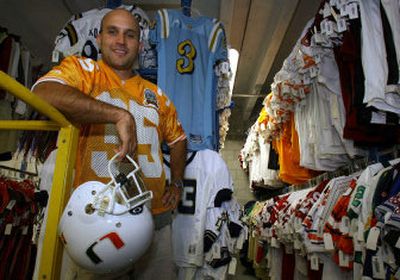
Scott Kent was working in real estate in the late 1990s when he got the inspiration for a new business.
A casual eBay user, Kent noticed a football jersey for sale on the site. He decided to try his hand at selling jerseys himself, drove to nearby Miami University and bought 10 used Hurricanes jerseys from the team’s equipment manager. The haul included jerseys worn by then-Hurricanes stars Santana Moss, Dan Morgan and Bryant McKinnie. Kent sold each for between $500 and $1,000 on the Internet.
“Based on my experience on eBay, I saw a demand level and I saw there was a market that wasn’t being fulfilled,” Kent said. “I saw an opportunity and went for it.”
It wouldn’t be his last visit. He eventually quit his day job and started a company called Players Locker, which has sold around 12,000 jerseys through deals with about 200 colleges. Along with The MeiGray Group, which specializes in pro jerseys, Kent’s company has ridden surging demand to the top of the burgeoning game-worn jersey marketplace.
“They’re just such a rare item,” said Steve Bloedow, pricing director for F+W Publications, which publishes Tuff Stuff and other sports collectibles magazines. “With sports cards there’s so many out there. … But when you’re talking about game-worn jerseys, how many jerseys does a guy actually wear every year?”
The sports memorabilia industry has a reputation for shady behavior, with hundreds of fraudulent products for sale online. But some businesses, like Players Locker and MeiGray Group, ensure their goods are real by buying directly from the teams and leagues through exclusive deals.
“The whole thing is authenticity,” said Barry Meisel, co-founder of MeiGray, which specializes in selling jerseys worn by pro athletes. “The reason it’s growing is because collectors now know you can get the real thing.”
There are a few competitors in the market and dozens of businesses that sell game-worn jerseys among other sports collectible items online. But none can match the scope of Players Locker and MeiGray’s stock – nor the number of official deals they have with the teams whose jerseys they sell.
Players Locker conducts about $70,000 to $80,000 in sales every month on Collegejersey.com, which launched in 2003. Kent and a staff of four, working in a Miami warehouse, primarily sell worn college football jerseys, as well as jerseys for basketball, baseball and hockey, and other collectibles.
While Kent mostly sells jerseys worn by obscure players, he’s listed several game-worn Clinton Portis jerseys, as well as those worn by other current NFL stars such as quarterback Carson Palmer (formerly of USC) and defensive lineman Tommie Harris (Oklahoma). Prices range from several hundred dollars to $5,000.
New Jersey-based MeiGray, which launched in 1997, leads the market for jerseys worn by pros. Meisel and MeiGray co-founder Bob Gray have deals with the NHL (selling jerseys of 22 of the league’s 30 teams), the NBA’s Dallas Mavericks, MLB’s Texas Rangers, the NFL’s Philadelphia Eagles and several minor league hockey teams.
MeiGray has registered nearly 50,000 jerseys in seven years, selling some of them for up to $12,000 each (though many are priced in the hundreds). About 9,000 customers are registered on www.meigray.com, tripling the site’s database in four years.
“People call and say, ‘I took my son to his first game and I want a jersey from that game. Who do you have?’ ” said Meisel, an avid collector of New York Rangers jerseys. “This is an enjoyable way to get close to your team.”