
Pots hit the spot
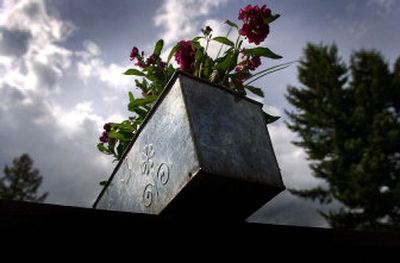
Let’s face it: Container gardening in the Inland Northwest’s hot dry summers can be a challenge. Here are a few suggestions to some things you can do now to create successful and beautiful pots.
Use the largest pot you can. A 6- to 8-inch wide pot will dry out much faster than a 14- to 16-incher. The pot should be made of plastic, hard-fired ceramic clay or lightweight Styrofoam.
Terra cotta and fiber pots made of pressed paper, coco fiber or peat are porous and water evaporates from them very easily in hot, windy weather.
Use a quality potting soil with a blend of compost and some peat, with a little perlite thrown in, to improve soil texture. Some potting mixes like Miracle-Gro’s Moisture Control mix has extra components that hold more moisture longer.
Refrain from using pine cones or packing peanuts in the bottom of outdoor containers.
While they do make the containers easier to move, the cones and peanuts take space away from the water reserve the plants will need later in the summer.
Add water-retaining granules to the soil to hold extra water. The most familiar is Soil Moist, a chemical polymer granule that, when mixed into potting soil, can absorb 200 times its weight in water and then slowly release it to the plant.
A new product in nurseries this year is Zeba Quench, a starch-based soil amendment that supposedly absorbs 400 times its weight in water. Look into the new drip systems designed to hook up to a faucet or sprinkler head and then run a drip head right to the pots. When placed on a timer of some sort, you will never again have to rush home to water the plants after a hot day.
Don’t add peat moss to container mixes to hold water. Peat moss dries out easily and is very difficult to get wet again.
Plants for pots
Landscape architect Barbara Safranek loves to use container plantings in her designs. The bigger the pot, the better, and she means several feet high and wide.
No matter the size of your pots, here are some planting guidelines and a tiny fraction of the plants she suggests for container plantings:
•Use plants with good foliage color as much as those with flower color, especially in pots in shady places.
•Plant at least one thing in a pot that will come back – perennials, ornamental grasses, dwarf conifers.
•Use annuals as spot color.
•Group plants with like watering and light requirements together in an individual pot.
•Use the rule of thirds for containers: One third for tall plants, one third for middle level filler plants and one third for plants that trail over the sides of the pot.
Plants for sun
A mix of sun-loving perennial, annual, ornamental grass or dwarf conifer.
Perennials:
Heuchera, Veronica, Salvia, Lavender just to mention a few.
Annuals:
Coleus – both shade and the new sun-tolerant varieties (Solenostemon scutellarioides).
Trailing petunias (Calibrachoa), commonly called million bell petunias.
Licorice plant (Helichrysum petiolare) – trailing foliage plant in several shades with touches of gray.
Sweet potato vine (Ipomoea batatas) – trailing foliage plant
Conifers:
Dwarf conifers that stay under 3 feet at maturity.
Hicksi yew – shade or sun; needs very large pot
Trailing junipers such as “Mother Lode” (yellow), “Bar Harbor” or “Whitoni” junipers (gray green)
Plants for shade
Hosta – smaller varieties for leaf color
Heuchera – leaf color
Snakeroot (Cimicifuga) – purple and green leaves
Ligularia “Brit Marie Crawford” – leaf color and flower
Boles Golden sedge (Carex) – golden colored grass
Golden creeping jenny (Lysimachia nummularia) – green or golden leaf.
Impatiens
Begonias
Grasses
Switch grasses (Pancium)
Purple fountain grass (Pennisetum rubrum) – Annual plants in the Inland Northwest
Feather reed grasses (Calamagrostis)
Blue fescues
For really hot, dry pots
Sedums – Both tall and trailing varieties.
Yucca – small varieties
Blanket flower – Gaillardia “Fanfare” and others
Russian sage