
Ford promises to protect its corporate jewel
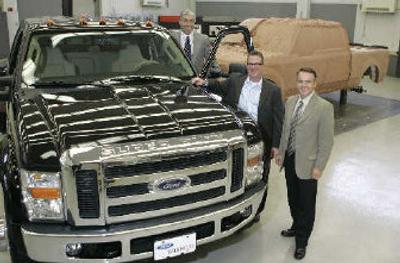
DETROIT — Ask those who guard Ford Motor Co.’s corporate jewel, the pickup truck, and they say to a person that the struggling company has no intention of relinquishing its No. 1 spot.
But Ford’s F-series trucks are under an attack seldom seen in the company’s 103-year history, mainly from domestic rival General Motors Corp. and Japanese nemesis Toyota Motor Corp.
GM’s all-new Chevrolet Silverado and GMC Sierra pickups started arriving in showrooms last month. Toyota, which has been pummeling its domestic counterparts with cars for several years but hasn’t made much headway in trucks, this week started building a new full-sized Tundra pickup at a plant in Texas.
Both companies want to supplant the Ford F-150 as the top-selling vehicle in America, and some industry analysts predict they’ll spend millions to do it. Ford, on the other hand, will spend millions to make sure they don’t.
“This is really going to be an interesting couple of years,” said Jim Sanfilippo, senior industry analyst for Bloomfield Hills-based Automotive Marketing Consultants Inc. “The reason the F-150 is put as the one under attack is because it’s the biggest dog perennially.”
At Dearborn-based Ford, the stakes have never been higher. The company so far this year has sold 762,050 F-series pickups, accounting for 32.6 percent of its sales.
But pickup, sport utility and other truck sales are down for the year as many buyers switch to more fuel-efficient vehicles with car underpinnings. During the first three quarters, Ford lost roughly $7 billion, and the company predicts red ink until 2009.
It intends to close 16 plants and is offering buyouts and early retirement packages to all 75,000 of its U.S. hourly workers as demand for its products shrinks.
“Obviously everyone knows the importance of the F-Series to the Ford Motor Co.,” said Pat Schiavone, the company’s truck design director who like others in charge of trucks, feels pressure to maintain the lead.
But company leaders, he said, know that the truck team has been successful in the past.
“Instead of questioning us, they support us, and that ends up showing up in the product,” he said.
Still, there are those GM folks on the other side of town who make pretty good trucks, too, and they’ve got brand-new ones to compete with a 3-year-old F-150. Toyota, meanwhile, has figured out that building the trucks in the heart of pickup country, San Antonio, Texas, should help lure more buyers when the new Tundra makes its way to dealers early next year.
Walter McManus, an analyst at the University of Michigan Transportation Research Institute, said he has driven the new GM trucks, and they are loaded with technology including V-8 engines that cut to four cylinders whenever possible to become more fuel efficient.
Ford, he said, is behind GM and DaimlerChrysler AG’s Chrysler Group on fuel efficiency because it doesn’t have the variable-cylinder engines. Toyota won’t say if it has the technology in the new Tundra.
McManus said gas mileage is a factor in pickup-buying decisions, especially with those who aren’t buying trucks strictly for work.
“If you get down to a choice between the Ford and the Tundra or a Chevrolet Silverado, fuel economy difference can be important,” McManus said.
Ford officials say that in real-world driving conditions, the GM trucks don’t have a fuel efficiency advantage because so many people use trucks for towing.