
Cranberries more than staple holiday sauce
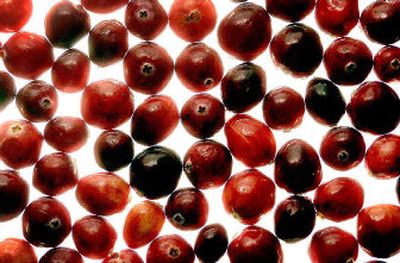
The Cranberry, that tart, jewel-colored, little berry, isn’t just a side dish at Thanksgiving.
Beyond being a tasty food, cranberries also have come to the forefront in medical research because of their health benefits. “There are some nice longitudinal studies now that the National Institutes of Health are putting together that look at the effects on humans,” says Kim Patten, director and researcher for the WSU Long Beach Research and Extension Unit.
Research has shown that the berry contains proanthocyanidins, compounds that can prevent the attachment of bacteria to internal body tissues. By drinking cranberry juice, the chemical compounds reduce the ability of the bacteria that cause urinary tract infections, ulcers and gum disease to gain a foothold. They are also high in antioxidants, which slow the aging process, and vitamin C.
Each year, around 10 million to 16 million pounds of cranberries are grown right here along Washington’s southwest coast. It’s been that way since the 1880s when Scandinavian loggers turned to farming in the marshy lands along the coast.
Today’s production in Washington is only a drop in the bucket of national production. “Washington production is less than two percent of the cranberries produced in North America,” says Patten. Although that is a small amount, “It is significant for the small communities in southwest coastal Washington,” she said.
All along the Long Beach Peninsula and Willapa Bay, farmers take advantage of acid soil, lots of moisture and cool weather to grow cranberry vines. Rather than growing in the flooded bogs we see in pictures, Washington’s berries are grown in fields and harvested dry. The berries ripen to a ruby red color in late September and are harvested with a machine that combs the berries off the vines.
From there they are sent to be processed into juice, sauce or dried; or as fresh berries. Ocean Spray, the largest producer of cranberries in the country, will open a new plant to process dried cranberries (Craisins) near Aberdeen, Wash., in the next few months. “They can’t keep up with demand,” says Patten.