
John Blanchette: O’Brien will take rightful place in track hall
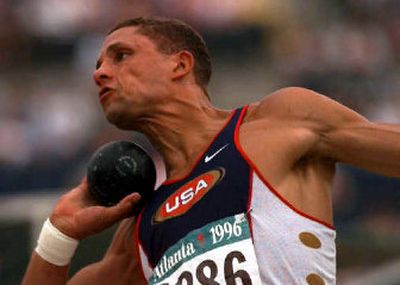
There are hall of famers, and then there are those who are put in as a hedge against becoming the Athletes That Time Forgot. Which wing will be home to Dan O’Brien’s plaque isn’t in question.
He’s famous already. The World’s Greatest Athlete.
Seems as if he always has been.
Surely it didn’t have to come down to a vote. He was the 1996 gold medalist in the decathlon, one of maybe five or six Olympic events anybody continues to care about – and, of course, the traditional entrée to that iconic lodge, the Wheaties box. But even before that he was Dan of “Dan vs. Dave,” that zeppelin of ‘90s advertising which, alas, came to something of a Hindenburg end – though that, too, enhanced O’Brien’s profile.
In that regard, his induction Saturday night into the National Track and Field Hall of Fame in Indianapolis is almost redundant – though it is certainly due.
And he has no illusions about why he’s going in.
“I’m a three-time world champion, but nobody remembers that,” said O’Brien, who survived some youthful struggles at the University of Idaho and Spokane Community College on the way to Olympic glory. “Nobody remembers winning the Goodwill Games except for me. They remember the Olympic Games.
“And they don’t remember who finished second.”
But they don’t forget first place, not in the decathlon. Jim Thorpe, Bob Mathias, Rafer Johnson, Bruce Jenner – all are among the most enduring Olympic champions of all time, men who earned the honorary distinction of World’s Greatest Athlete for winning a competition that’s been called 10 events in search of a victim.
“I really looked up to those guys, the legends of the sport,” O’Brien said. “There were a lot of tears and a lot of pressure, but I made it into the ‘cool guys club.’ “
Pressure? It came down to two steamy nights in Atlanta, but O’Brien had been an overwhelming favorite to win the gold medal for four long years. Though he led from the third event on, he could never quite shake the surprise young silver medalist, Frank Busemann of Germany, until the next-to-last event – the javelin. O’Brien’s winning score of 8,824 points was short of both the Olympic and his own world record, and he had a lifetime best in only one event – also the javelin – which suggested a game plan something along the lines of Don’t Screw It Up.
So, yeah, the pressure was insane.
No wonder O’Brien’s first emotion when someone thrust an American flag into his hands after finishing was “relief – definitely relief.
“For a lot of reasons, but mostly from the standpoint that I was glad it went just the way I wanted,” he said. “There was a finality to it.”
A finality four years in the making.
After winning his first world championship in 1991, O’Brien had been the presumptive Olympic favorite the next year. That’s when Reebok launched its heavy-airplay “Dan vs. Dave” campaign, a cute serial rivalry featuring O’Brien and fellow decathlete Dave Johnson which, the ads claimed, was “to be settled in Barcelona.” Except that O’Brien stunningly no-heighted for zero points in the decathlon pole vault at the Olympic Trials in New Orleans and didn’t make the team, and Johnson wound up with just a bronze medal in Spain.
It was a failure that O’Brien refused to let define him. He set his world record of 8,891 – since broken – later that year, and the comeback was on.
“The most difficult thing was dealing with people around me,” he said. “A lot of people were devastated by it. As a kid, I’d played a lot of sports and experienced winning and losing, and I always felt if you weren’t prepared to lose, you weren’t prepared to win.”
In retrospect, no one should have been all that surprised at O’Brien’s rebound. With the help of coach Mike Keller, he had pulled himself up from the depths at Idaho, where he had became academically ineligible almost immediately as a freshman, grappled with alcohol use and took three years to get himself righted. As time went on, O’Brien downplayed the drama of those trials, but never underestimated their impact.
“No question I would have done some things differently,” said O’Brien, who now lives in Scottsdale and helps train athletes at Arizona State, “but being able to get through those moments made me into the champion I ended up being. I look back and know I avoided things that have dragged down some big-name athletes. We were all at a spot where you have to make a choice and ask yourself, ‘Who are you going to trust?’ I was lucky to have good people in my corner.”
Two of them, Keller and Washington State coach Rick Sloan – “Team O’Brien,” he calls them – will share this moment in Indianapolis, 10 years after the big moment. Not that it feels that long to O’Brien, though he turned 40 last July.
“There are times,” he laughed, “when I think I can still do it.”