
All puppies need house rules

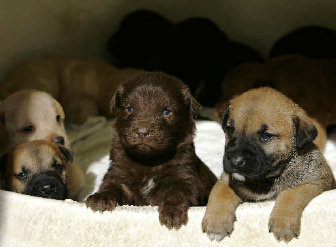
Got puppy? Want a calm friendly adult dog? Here’s how to prevent bad behaviors and encourage good ones.
We tend to fall head over heels in love with a new puppy and lavish the hairy princess or prince with presents and attention. As the puppy grows, we hesitate to pull back on this royal treatment in fear of being rejected. While it is fun to spoil a puppy in this way, the end result is often unruly, fearful, or aggressive adult dog behavior.
In reality, all puppies (like children) thrive on clear consistent rules. Evolved as pack animals, canines search for and bond most tightly to their “leader figure.” Naive people think this role is based on a stern voice and physical punishments. That approach achieves compliance through fear resulting in a lack of trust in humans that often leads to aggression and other stress-related behavior problems.
The new school of puppy raising recognizes that the real leader is the individual who controls what is valuable to the puppy – things like freedom, food, treats, play, petting and praise. The basic strategy is to initially withhold desired resources (as the leader) then give them in exchange for desired behaviors. Instead of misunderstood threats, you become the “contingent giver” of everything good.
Here are six steps to raising an ideal puppy:
•Contented confinement: Whether inside a portable kennel or tethered near you on-leash indoors, this house rule paradoxically says, “By accepting confinement, you get more freedom.” That is, dogs that learn how to shift into “park” (when tethered) can tag along with you to more places. A tethered or kenneled puppy doesn’t have toilet accidents, doesn’t destroy, or dash out a door. One tip for teaching contented acceptance early-on is to choose a favorite chew that you only provide during tethering. Another tip is to turn your back (no social contact) if the pup whines or starts a tantrum, then look at him and praise when he is resting quietly. The puppy earns freedom after toilet and chew training are reliable.
•Happy hands: It is important for pups to learn that human hands are the providers of all good things, so there is no spanking in puppy rearing. Remember, “dogs don’t hit other dogs,” so spanking or scruffing is more confusing than instructive. Introduce the concept that human hands are always good by gently massaging your young puppy every day for a few minutes. Give food treats to reward acceptance of massaging sensitive puppy areas like face and feet. This daily exercise teaches the puppy that as leader you have the right to control his body and that you can be trusted.
•Rag-doll dogs: A worthy goal is to raise a puppy that can be gently placed into every possible body position without resistance. In the beginning, if the puppy resists, just go slower, act jolly, and give more treats during handling. The long-term goal is a happy, relaxed, pup that is so trusting he reminds you of a rag-doll dog and accepts all reasonable body manipulations with aplomb. This prepares your puppy to accept nonpainful handling by others such as the groomer that cleans up the fur between the toes, or the vet that examines a rash in the armpit, or the child that grabs and hugs.
•Thrill of the chill: Time-outs are one appropriate consequence for unruly puppies. Think of this as allowing you and your aroused – most likely confused – puppy to “chill.” Then decide you will do a better job showing your puppy how he can exhibit normal puppy behaviors in safe, acceptable ways. Ask yourself, if that was wrong, what would be right? If your puppy is chewing a table leg, what can you provide and praise your pup for chewing?
•Ratchet down the reunions: For social animals like wolves or dogs, being alone for long periods of time is stressful. Therefore, we often return home to a pooch party of excited jumping, barking, mouthing, etc. If your pup will be an adult tiny tot, your greeting rule may allow jumping on you, but even mini-dogs can scratch and tear nylons, and trigger a human fall. Therefore, I recommend this house rule: “When I come home, you must sit to be greeted. Then, I’ll crouch down and lavish you with attention; but only while your rear is on the ground.” This rule should be in effect for all family members, and guests with your instruction. If your dog is too excited to sit after two minutes, just move him to a room for a time out – no spanking or yelling – and let him out when he can sit.
•Fur-get instant gratification: Requiring a sit before receiving any valued resource promotes good doggy manners. Think of a “sit” as the doggie equivalent of, “Mother may I?” House rules should also include a “sit and wait” for permission to go through any exterior doorway in your home, car or before going off any curb. This “wait until permission to go” rule not only promotes good manners but also protects a pup from the dangers of running into traffic.
Establishing house rules means you can spare the hands but still not spoil the canine. A dog of any age that is clear on the rules and not being scolded frequently is not only more mannerly but also a calmer, happier personality.