
Big bucks make comeback in N.E.
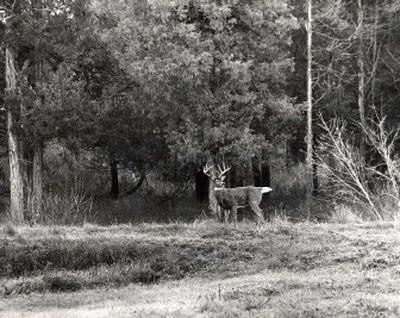
Four northeastern Washington game management units were by far the best general season deer-producing areas in the state in 2005.
The Huckleberry, Mount Spokane, 49 Degrees North and Sherman units produced about 7,500 deer to hunters who averaged success rates of better than 30 percent.
“I think we’re in a stable situation, not in a boom or bust, but good, healthy numbers of deer,” said Steve Zender, Department of Fish and Wildlife district biologist for northeastern Washington.
“The distribution of mature bucks has increased every year since 1999. Last year, 19 percent of the bucks coming through our check stations were five-point or better. That’s up from 10 percent in 1999.”
The late buck season, which runs Nov. 6-19, through two weekends in units 105-124, continues to be one of the best opportunities for filling at tag. Most hunters are limited to shooting only a whitetail buck. This year, however, there’s an additional opportunity:
For the first time, youth, senior and handicapped tag holders will be allowed to hunt antlerless whitetails during the late buck season.
“Allowing this group of hunters to take does isn’t the big huge harvest some people think it is,” Zender said. “It’s a great opportunity, but as a group, they don’t kill a whole lot of deer, not as many as archers and muzzleloaders.”
Another change to note: The early season deer hunt in most of northeastern Washington runs Oct. 14-27, closing on the day before the opening of elk season. However, in Ferry County and east Okanogan units 101 and 204, the deer season continues through the opening weekend of elk season and closes on Oct. 29.
“There’s no shortage of whitetails in those units and there’s no much for elk hunting, so we agreed with Ferry County sportsmen and allowed that season to continue one more weekend as an added opportunity for deer hunters and businesses in that area,” Zender said.
Mount Spokane unit 124 also has good numbers of white-tailed deer, but the higher density of landowners makes access more difficult for hunters.
Overall, whitetail numbers are good in Spokane County and farther south and west, said Dave Volsen, area biologist. He said he was also happy to report that mule deer continue to make a slow comeback south of Spokane, including the Spangle area. However, whitetails in Mica Peak and Cheney areas still are coming back from a disease outbreak two years ago and numbers of mule deer along the north slopes of the Snake River had to be cut back in the past few years to reduce crop damage.
South of the Snake River in Eastern Washington, whitetail herds continue to improve after some difficult years, according to Pat Fowler, Fish and Wildlife Department biologist in Walla Walla. “I’m worried about the weather we’ve been having,” he said. “If we can avoid disease and die-offs this winter, the deer should continue to improve. But this fall, I expect the deer harvest to be only 70-80 percent of normal.”
In Okanogan and Chelan counties, where deer herds were in excellent shape last year, fires are the big question mark for this season.
The Tripod fire alone had covered more than 160,000 acres in the Methow region by early September.
“We’re evaluating the units impacted by fires, and they’ll certainly affect the early buck hunts in places like the Pasayten Wilderness,” said Matt Monda, Fish and Wildlife Department regional wildlife manager in Ephrata. “But to be realistic, we won’t know what to tell hunters about what the fires have done to deer movements and habitat until the smoke clears.
One thing hunters do know is that the mule deer season in Chelan and Okanogan counties has been reduced from 14 days last year to nine days this October.
“The deer herds are high and growing; we even increased antlerless permits,” Monda said. “But while a longer season doesn’t effect the overall population, it has a big impact on bigger bucks. Chelan and Okanogan counties are unique because they have a lot of older age class bucks that migrate down from the high country. The longer the season the more vulnerable they are when they come down to low elevations.
“Things are going well for deer in Region 2, we just want to maintain a healthy crop of older bucks.”
Across Washington, biologists remain concerned about the hot, dry conditions going into the fall deer season for two reasons:
“A normal fall green-up is needed for big-game to layer on the fat they’ll need to survive the winter, especially if it’s a nasty one.
“Disease could break out, as it did during summers of 1992 and 1999, when large number of deer died in northeastern Washington from a disease called EHD.
“We’re keeping our fingers crossed,” said Zender last week as temperatures loomed in the 90s. “Conditions are ripe.”