
Stability ball not for beginners
Q: At home the only exercise equipment I have is a stability ball. It came with a sheet of exercises and instructions on how to use the ball. I put these exercises together for a total body workout that I do three days a week. Are these workouts beneficial, or should I try to do something more?
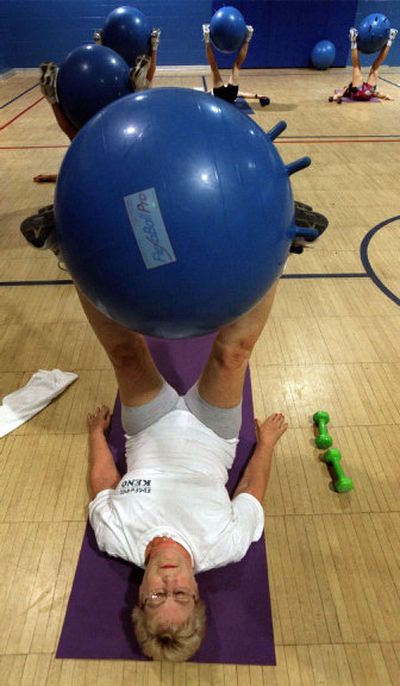
A: The stability ball, also known as a fitness or physio ball, has become a popular exercise tool both at home and in fitness facilities. The large inflated ball, which looks like a pool- or child’s toy, can be used to perform a variety of exercises.
The stability ball should be used as a tool to provide an unstable environment while completing exercises. This unstable environment is a progression from completing the exercises in their more basic form. The unstable environment encourages the body to recruit as many muscle groups as necessary to complete the exercise effectively. This recruitment can help improve muscle stabilizers.
It is important that you first perform correctly in a stable environment any exercises you would like to do on the ball. For example, before completing abdominal exercises on the ball, first perfect your technique on the floor.
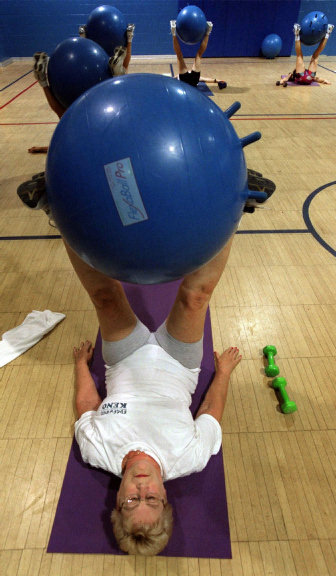
The stability ball can be used while actually seated on the ball, against the wall, under your feet while lying down or even to provide slight upper body resistance.
It is important to have the right size stability ball for your height. While seated on the ball, your hips and feet should be parallel with each other. A sizing chart normally accompanies the ball to help you determine which size ball is right for you.
A basic total body workout that you can complete several days a week includes push-ups, back extensions, shoulder press, ball squats, leg curls and abdominal exercises, to name a few. Performed correctly, it can be a great workout.
Teamed with cardiovascular exercise and proper nutrition, your stability ball workout can be part of a great fitness program. Remember to be careful when trying new exercises on the ball, and don’t complete an exercise on the ball until you feel comfortable performing the exercise without the ball.