
Dead Sea Scrolls are boon for museums
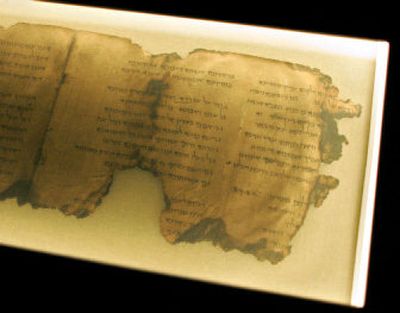
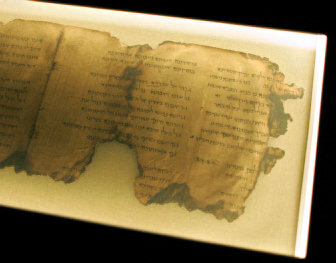
SEATTLE – Not since King Tut set attendance records in the 1970s has an exhibit from the Middle East been such a guaranteed success for American museums.
About a decade ago, museum directors began to dream of desert oases and ancient history again when the Israel Antiquities Authority decided it was time to share the Dead Sea Scrolls with the rest of the world.
A dozen exhibits in the United States have focused on the historical and religious aspects of this 1947 archaeological discovery in the Judean desert, but now Dead Sea Scrolls exhibits are moving into new territories: the realm of science.
A new exhibit co-designed by hands-on science museums in Seattle and Charlotte, N.C., opens this weekend at the Pacific Science Center. It is unique in several ways, including its efforts to capture the imagination of children as well as their parents.
Children can experiment with puzzle pieces and pottery fragments while their older siblings and parents explore the ways DNA has helped scientists piece fragments of handwritten biblical texts back together. The kid’s version of the hand-held audio tour is entertaining and should keep school-age children interested in the exhibit.
The director of the Pacific Science Center said 10 days before the exhibit was set to open that the museum had already sold 50,000 advance tickets for the 105-day run expected to draw 165,000 people. Charlotte, a smaller city with a smaller museum, attracted more than 222,000 visitors during its run, which exceeded the museum’s highest expectations, said museum spokeswoman Debra Smul.
Officials at the Seattle museum say they hope the exhibit will sell a lot of tickets and add money to the museum’s reserves to pay for future programs and exhibits.
“We hope that we’ll be able to develop a financial surplus from it,” said Bryce Seidl, president and CEO of the science center.
But the Seattle museum doesn’t expect to approach its all-time biggest crowd pleaser, a 1984 exhibit on China that drew about 600,000 people. That’s because the Israel Antiquities Authority limits the amount of light the scroll fragments can be exposed to and that limits the hours the exhibit can be open.
As one of the leading researchers to study the scrolls explains the draw of these ancient artifacts with connections to Christianity, Judaism, and life in the Middle East 2,000 years ago, attracting people will not be a problem.
“At every one (of these exhibits) there has been an outstanding turnout,” said Eugene Ulrich, professor of Hebrew scriptures at the University of Notre Dame.
Ulrich has been impressed with the way people came from hundreds of miles away to learn something about the texts that may give them new insights into their religious faith or call into question some of their long-held beliefs – depending on their perspective.
Until the scrolls were discovered, the oldest Hebrew biblical manuscript known to scholars was written in 895 B.C., and scientists say the scrolls date back at least 1,000 years before that.
Ulrich said the scrolls have allowed religious scholars to confirm the accuracy of the Hebrew bible and also to learn more about the time when Christianity was forming. Because the scrolls contain some differences from the modern texts, they have generated controversy in religious circles.
“I try to tell audiences that the Bible hasn’t changed at all; it’s our knowledge of how it came to be that has been enriched,” Ulrich said.
Seidl promised that people who come to the Seattle exhibit will also have their knowledge of the science behind historical research enriched.
The science centers in Seattle and Charlotte shared the financial and creative burden of creating the new exhibit and its accompanying lecture series and educational programs for kids, which cost Seattle $2.4 million to help build and run. Other than selling tickets, another way the two museums may be able to make back some of their investment is by loaning the exhibits to other science museums.
Seidl said the exhibit is expected to have other positive side effects: more tourism, community education for both children and adults, new courses at the University of Washington and Seattle University and an ongoing multi-faith dialogue.
“All of that is coming about because we’re doing an exhibit based on science,” he said.
He said he’s glad he didn’t know of the complexity of mounting such an exhibit – including the complexity of working with valuable objects from another country and the safety and security measures necessary to protect both the objects and the people viewing them – before he encouraged his board of directors to take on this project.