
Early bloomers welcome spring

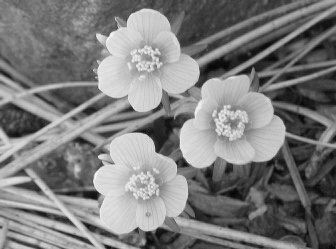
Finally, it’s spring in the garden.
Crocuses, early daffodils, irises, tulips and cheery clumps of winter aconites (Eranthis hyemalis) are blooming. Though only a couple of inches tall, their bright yellow buttercuplike flowers are easily visible in my woodland garden.
Winter aconites are related to the early buttercups we hunt on New Year’s Day around here and belong to the buttercup family (Ranunculaceae). This family is ideal for the garden because someone or other always seems to be blooming throughout the growing season.
Liverwort (Hepatica nobilis) also is an early bloomer, with bright blue flowers and leathery, three-lobed leaves that remain green throughout the winter. New leaves follow the flowers, and the whole plant makes a tidy and attractive clump at the front of a border.
Another lovely member of this family is the small and delicate rue anemone (Anemonella thalictroides). A host of palest pink flowers dance in the slightest breeze on an ankle-high plant with foliage that resembles meadow rue (Thalictrum spp.)
Other related anemones that I enjoy in early spring include the Grecian windflower (Anemone blanda), which will carpet the ground in blue, pink and white, and the pasque flower (Anemone pulsatilla), which grows a bit taller and comes in shades of white, pink and purple.
Some of the newer cultivars offer fringed petals as well, and the seed pods on all have equally showy tufts of silvery hair.
Our native Clematis columbiana belongs to this family, blooming early and prolifically, with nodding, pale periwinkle-blue flowers that look almost translucent in the sunlight. As with other clematis varieties, the attractive, fluffy seed heads extend the flowering period.
Early spring is also prime hellebore season. Helleborus niger unfolds large, pure white blooms as soon as a little warmth arrives in the spring. The flowers keep coming for weeks, turning upwards toward the sun.
Helleborus orientalis is almost as early, prolific and long-blooming and comes in pink to burgundy shades.
Hellebores remain green throughout the winter, too, and their attractive seed heads make them interesting even when not in flower.
Garden tips
•Clean up the last of the winter debris and weed now to save work later.
•For easy maintenance, plant native trees and shrubs accustomed to our soil and climate.
•Seed or sod new lawn. Germination may take a couple of weeks. Top-dress and reseed bare spots.
•Fertilize spring-blooming shrubs after flowering.
•Dig garden beds to about 12 inches as soon as the soil is dry enough to work. Working in organic material adds nutrients and loosens the soil.
•Seed carrots, green beans and beets and plant potatoes and onions.
•Deadhead bulbs as they finish blooming.
•Plant shallow-rooted annuals to hide fading foliage of spring bulbs.
•Fertilize bulbs with balanced, organic fertilizer as they finish blooming.
•Fertilize emerging perennials, especially heavy feeders such as daylilies.
•Cut back aging herbs such as sage, mint, thyme, savory and lavender by one half.
•To avoid compaction, don’t walk on soft soil.
•Compost clean garden refuse, turning the compost weekly for best results.