
Trade complaints target China

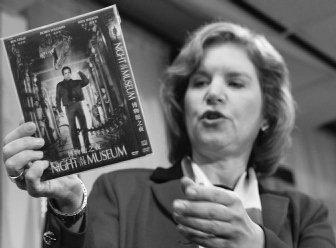
WASHINGTON – The Bush administration Monday fired another salvo in its campaign against Chinese trade practices, announcing suits to force Beijing to crack down on rampant counterfeiting and drop restrictions on the distribution of American music, movies and books.
U.S. Trade Representative Susan Schwab said the United States will file two formal complaints Tuesday against China at the World Trade Organization in Geneva.
The first accuses China of setting “excessively high thresholds for launching criminal prosecutions” against the makers and distributors of pirated products, ranging from DVDs of American movies to the humble Zippo lighter.
The second challenges China’s insistence that some of the counterfeiters’ chief targets – books, movies, music and computer software – be handled solely by state-owned importers, a policy that can delay distribution of legitimate material and create an opening for pirates, Schwab said.
“This is more than a handbag here or logo item there; it is often theft on a grand scale,” Schwab said.
The new cases mark the third trade action this year by the United States against China, a sign that the Bush administration is getting tough after six years of talk and conciliation, analysts said. Last month, the administration said it would impose tariffs on Chinese imports of glossy paper to combat Chinese government subsidies. And in February, Schwab announced another WTO case charging China with providing illegal incentives to Chinese manufacturers to export their products.
All three moves follow long-standing frustration with Chinese policies. But analysts said the actions also might be intended to defuse mounting political pressure on Capitol Hill to reverse a growing trade deficit with China, which last year hit a record $232.5 billion, according to U.S. figures. Lawmakers contend that China keeps its currency, the yuan, deliberately undervalued to boost exports. They also have complained about China’s widespread piracy of copyrighted American goods and have threatened to slap huge tariffs on Chinese products in an effort to protect U.S. jobs.
“The timing is clearly (designed) to tell the Congress especially, but also to tell the Chinese: ‘We’re going to thump you as a way of trying to head off congressional legislation. Our cases are reasonable and you ought to respond to them because, if you don’t, you’ll make it easier for very strong legislation to pass,’ ” said Gary Hufbauer, a senior fellow at the Peter G. Peterson Institute for International Economics.
Sen. Charles Schumer, D-N.Y., a leader in the effort to force China to revalue its currency, hailed the WTO cases Monday. “I hope this is just the beginning of a much stronger administration stance on China’s nonstop violation of free-trade rules,” he said in a statement.
Sen. Charles Grassley, of Iowa, the senior Republican on the Finance Committee, also welcomed the news. “When China continues to refuse to play by the rules, then we need to take strong action, like we’re doing today,” he said in a statement.
Schwab said the cases “should not be viewed as hostile actions against China,” adding that they follow lengthy negotiations and represent “the normal way for mature trading partners” to resolve their differences.
Reaction from China, where officials Monday offered no response to the new WTO action, has so far been muted. But Song Hong, head of international trade research at the Chinese Academy of Social Sciences in Beijing, said he worries that a few more jabs from Washington could trigger angry retaliation.