
Connected in our grief
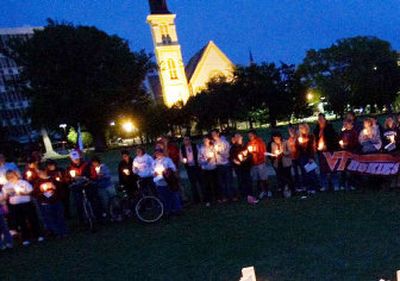
CHICAGO – Horrible, real-world happenings unfolded almost simultaneously in the virtual world, as Virginia Tech students and people from all over the world gathered online to grieve and vent last week. From blogging to cell phone video, technology has forever changed the way we process and communicate about tragedy – in good ways, and perhaps bad.
Almost immediately after last Monday’s deadly shootings, Virginia Tech students created an “I’m OK” page on Facebook to let one another and their loved ones know that they survived. Other students posted photos and cell phone video on their own sites, or shared it just hours after the shootings with news organizations.
Thanks to the portability and speed of today’s technology, the students’ shots are likely to become some of the “defining images” of the tragedy, says Amanda Lenhart, a senior researcher at the Pew Internet & American Life Project, which monitors high-tech culture.
And nowhere, she says, has the impact of the Internet been seen more than on social networking sites, most often frequented by young people.
“What better place to mourn someone than a place that they themselves build to express who they are, and a place where the deceased and his or her friends may have spent a great deal of time interacting?” Lenhart asks.
Since April 16, there has been a nonstop flood of postings on the popular Facebook student site, on MySpace and LiveJournal, and on personal blogs – expressing everything from grief to anger to confusion.
Jesse Connolly, a 21-year-old from Lynn, Mass., made a posting Tuesday on the MySpace page of Ross Alameddine, one of the VT students who died. The pair worked together last summer at an electronics store in their home state.
“If only you were here to read this, Ross… You’d know what an imaginative, intelligent, compassionate and most of all hysterically funny human being you were, and how appreciative I am to have spent last summer working with such a great kid,” Connolly wrote. “My every thought is with you and your family.”
Even before names of the victims were officially released, a few students created Facebook memorial pages for some of the dead – though others worried that it was too soon, since family and friends were still being notified.
There are myriad other ways the Internet continues to shape the grieving process.
In addition to using the university’s Web site to communicate with the world, Virginia Tech officials planned to set up a site where families of the victims could post photos.
TechSideline.com, a site for VT sports fans, also quickly morphed into a meeting place where students, family and friends could communicate – especially when phones were jammed.
And as a show of support, many students, including scores from other colleges, replaced their Facebook profile photos with a VT logo shrouded in a black ribbon.
Patti Jacobs, a junior at Canisius College in Buffalo, N.Y., was among them. Saddened by the shootings, she went searching for memorial pages on Facebook Tuesday morning.
Jacobs was alarmed when she also came across several pages that included hateful, sometimes racist remarks toward shooter Cho Seung-Hui, other Asians and his family.
“This is not about just one guy and his problems,” Jacobs wrote. “Yes – he alone is accountable for all the damage and pain caused yesterday – but the reason for this was not his race, his child-rearing by his family or his girlfriend breaking up with him. …
“How much of our society is accountable as well?”
Some of the hateful postings were removed, likely after other Facebook users flagged them – a process of communal self-editing used on some sites.
Despite technology’s darker side, Lenhart at Pew says the help the Internet provides during tragedies like these is undeniable.
“No longer do you need to drive to a headstone in a cemetery or a roadside flower strewn-cross, or fly across the country to a funeral,” she says, “but you can log on and express yourself, and interact with others who are feeling the same thing.”