
Wheels of fortune
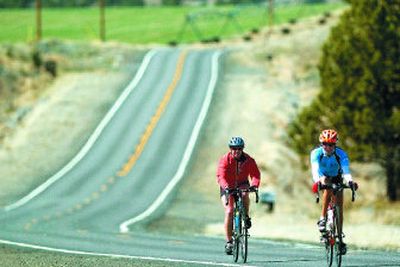
SISTERS, Ore. — The population will more than double here for a few days in September. But it won’t be rodeo riders, quilters or artists and crafters surging to town: It will be more than 2,000 bicyclists from across the country.
The 20th annual Cycle Oregon ride will start in Sisters on Sept. 8, bringing a rush of riders into town at the beginning and end of the 470-mile, weeklong ride.
Jerry Norquist, Cycle Oregon’s ride director, is quick to point out that the event isn’t a race, even though some people may take the routes faster than others. The real purpose is to raise awareness of the economic difficulties faced by many rural parts of Oregon and to expose riders to different parts of the state each year.
“We’re really a bike ride,” Norquist said. “We encourage people to spend time in the communities that we travel through.”
The event carries an $800 fee for each rider, and some of that money goes back to small communities in the form of grants from Cycle Oregon. All 2,000 spots sold out long ago and there is a waiting list of about 300 more riders, Norquist said. Dozens more people will support the riders by moving equipment each day, serving meals and providing water stops along the way.
This year’s event will take riders south from Sisters to La Pine on the first day. After leaving Central Oregon, the route winds up to Crater Lake and down the west side of the Cascades to within about 20 miles of Eugene on Interstate 5. In the second half of the week, riders will work their way north and east again through the Cascades back to Sisters, with an altitude change of as much as 4,000 feet on some days.
Each day’s segment varies in length between about 50 and 100 miles, but there is no time limit for completing the legs.
The event’s organizers provide almost everything riders will need for the week: tents, food and water stops, a shower truck, and live entertainment and drinks each night.
Several 18-wheeler trucks take off each morning with all of the riders’ gear, setting up camp at the next stop before everyone arrives in the evening.
A portion of the $800-per-rider registration fee goes into a fund that doles out about $100,000 to the towns each year. In 2002, Sisters got a grant for a large tent to hold large groups. The town still uses the tent for various community events.
“Never once have I talked to anyone who has felt like we weren’t welcome to be out there,” Buckles said.
Info: www.cycleoregon.com