
Offering solutions globally
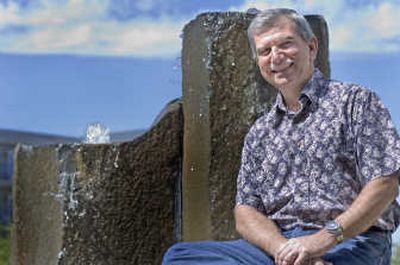
He’s a licensed pilot, so he’s used to traveling.
In the last few years since becoming president of Partners International, Jon Lewis’ passport has been stamped almost as often as the secretary of state’s. That’s because one of his primary roles is to oversee Partners International’s work around the world.
The organization, based in north Spokane, is global. It helps support humanitarian work conducted by locals for their own people.
Examples can be found in North Africa, where Lewis traveled recently. There, Partners International works with nationals to develop leadership training, provide small business loans and meet the needs of poor women, youth and handicapped people.
Upon returning to Spokane, Lewis told his staff about a situation he’d encountered in Morocco.
“In that culture, most people consider the handicapped as a curse, shame or embarrassment. Families don’t want anyone to know they have a handicapped child,” he said. “That’s why there are very few services for them. As adults, many of them must beg on the streets for their livelihood.”
Lewis described a man who had been rejected by his parents. He could not walk, and he was homeless.
One day, a worker at a rehab center, supported partially by Partners International, found the man and carried him to the center. Within a few months, the man had learned to walk and had become involved in Special Olympics, winning a silver medal in the long jump. Today, he has a job at the rehab center, supervising the woodworking shop.
Lewis said dozens of similar stories have emerged from this ministry in the Moroccan capital city of Rabat.
Lewis and his companions also traveled to Mali, where desert sand obliterated the roads. An all-terrain vehicle took them to a remote settlement on the outskirts of Timbuktu.
To their surprise, practically every villager had gathered to greet them. Standing in a huge circle around the Americans, the people performed a dramatic traditional sword dance.
Their enthusiasm, Lewis said, showed that a level of trust had been established.
“We have helped fund their school, grain mill and water well,” he said of the village. “To help these people – to better their whole livelihood – you have to be involved in a variety of ministries.”
One example is the women’s literacy and vocational center in Timbuktu.
“Women in rural Mali have little hope of education and employment opportunities,” Lewis said. The center’s classes in sewing, knitting, crocheting and cooking – offered in two languages – make a more prosperous future possible.
Lewis’ next stop provided a heart-wrenching moment for him and his colleagues. The group visited Gory Island, off the coast of Senegal.
This infamous island was the wholesale marketing point for slave trading for hundreds of years. Its auction blocks and other landmarks are still on display, like an outdoor museum.
“That’s where slaves were herded before buyers, who pointed out the ones they wanted,” said Lewis. “Then the slaves were marched through The Door of No Return, onto gangplanks and into waiting ships that took them to the New World.”
Lewis paused, sighed, then spoke quietly. “It’s a terrible example of man’s inhumanity to man.”
Back on Senegal’s mainland, the mood of the group improved considerably when one of Lewis’ American companions met a child who wanted to become a pen pal. They exchanged e-mail addresses and plan to keep in touch.
This, Lewis said, is one way to establish relationships with local people.
Another way is to continue visiting remote locations and encouraging people in their work.
That’s why Lewis logs more than 100,000 air miles a year. He says he doesn’t mind because he believes this is what sets Partners International apart from other mission organizations.
“We seek out those national ministries right where they are, in the tough places of the world,” he said. “The right kind of help, applied at just the right place, can have a huge impact on God’s kingdom.”