
Covering Katrina
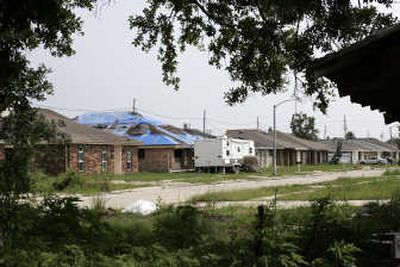
NEW ORLEANS – “This is the last pretty thing you’re going to see until we get to the lakefront,” tour guide Rose Scott tells passengers gazing at the live oaks of City Park.
They’re a bit more than an hour into a van tour of the impact of Hurricane Katrina. Scott’s employer, Isabelle Cossart of Tours by Isabelle, calls it 70 miles of destruction in 3 1/2 hours.
Two years after Katrina turned the New Orleans area into a lake of misery, demand for tours of the devastation still overwhelms that for visits to mainstay attractions such as cemeteries, plantations and swamps.
“Our survival depends on it. If I quit doing the post-Katrina city tour, I’m out of business,” Cossart says.
Tourism officials have struggled with post-hurricane stress on their industry. Some downtown hotels – including the Hyatt and the Fairmont – remain closed.
But the convention center and most tourist attractions are open. The bellwether French Quarter was almost untouched by hurricane.
Kelly Schulz, spokeswoman for the New Orleans Convention and Visitors Bureau, says the disaster tours help convince travel agents and convention bookers that devastated areas are distant from tourism venues.
Tours by Isabelle passenger Carole Carr of Mount Prospect, Ill., a Chicago suburb, says she was pleasantly surprised by how good the downtown area looked, but felt uneasy about how little has been done elsewhere.
“It’s disturbing that more hasn’t been done to protect them from future problems,” she says. “The longer people stay away, the less chance that they would ever come back. And I’m sure many are not coming back.”
About 220,000 people out of the pre-Katrina population of 455,000 have returned.
Cossart’s tours began just over a month after Katrina, which struck on Aug. 29, 2005. The U.S. Army Corps of Engineers hired her as a guide for Japanese engineers who had worked in Kobe after the 1995 earthquake.
After visiting levee breaches, the wiped-out Lower 9th Ward and Biloxi, Miss., Cossart says, she asked how long they thought it would take to rebuild. Their answer: 10 years, plus time for political maneuvering.
The $58-per-person Katrina tour now makes up three-quarters of her business, and she recently bought a third van.
Along the route, Scott’s van passes the convention center and Superdome, where thousands of refugees suffered after Katrina.
“The convention center was never supposed to be a shelter. That’s why they didn’t have food there,” she says.
Scott turns the van toward areas little known to outsiders before Katrina: Gentilly and Lakeview, where the view of Lake Pontchartrain provides respite on the way to the Lower 9th Ward.
She drives on to St. Bernard, the hard-hit parish just east of New Orleans where she lived until the storm.
Scott, who is living an hour northeast of New Orleans in Carriere, Miss., has gutted her former 3,100-square-foot house but hasn’t yet decided whether to rebuild. She worries about environmental safety because more than water was released by the storm.
As she pulls into her old neighborhood, she tells passengers about the 1.3-million-gallon spill from the nearby Murphy Oil tank farm that complicated her cleanup and clouded her future.
For Scott, Katrina and its aftermath are very personal matters.
“This is history,” she says of the disaster tours. “People need to see what happened here so they can fix it where it never happens again.”
Disaster tours at one time made up 99 percent of Cossart’s business, she says, but “people are starting to ask for beauty again.”
At Gray Line, which started disaster tours in January 2006, the $35 trip made up about 65 percent of total ridership for nine months. It’s now down to half the total, says vice president and general manager Gary Hoffman.
Passenger counts are double those of 2006, when tourism took a sharp fall. Still, total business is only about 40 percent of pre-Katrina levels, Hoffman says.
The CVB’s Schulz says business and convention travel has recovered much faster than leisure visits to New Orleans, but there are good signs about the latter.
Mardi Gras attendance rebounded this year to about 800,000 – about 80 percent of pre-Katrina. Attendance records were set at the French Quarter Festival and the New Orleans Jazz and Heritage Festival.
“Our biggest challenge is really just dispelling myths,” Schulz says, and convincing people New Orleans is a good place to come despite the bad news.