
New product may restore soil damaged by wildfires
GREEN BAY, Wis. – The millions of acres scorched by wildfires and left susceptible to mudslides can be shored up by spreading inexpensive granules that a company says will keep barren soil in place when the rainy season arrives.
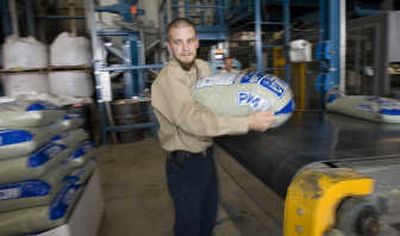
U.S. Forest Service scientists have been testing Encap LLC’s product that bonds the clay inside soil to form a “net” to help vegetation recover. Called PAM-12, it’s a synthetic chemical that looks like salt and is wrapped in recycled paper.
Soil scientists have found few other ways to control large-scale erosion after a fire aside from straw, which absorbs and retains moisture like mulch but doesn’t actually strengthen soil.
“The concept of using soil itself to prevent erosion and establish new plant life, it’s exciting,” said Mike Krysiak, Encap’s president and chief officer.
Already this year, nearly 7 million acres have burned across the country, and about 40 fires of at least 500 acres each were raging this week, most in Montana and Idaho.
After smoke infiltrates soil, the ground tends to repel water instead of absorb it. So rain stays on the surface and carries away topsoil and nutrients when it cascades downhill.
PAM-12 can help prevent that by causing the dirt to form tiny clumps and opening pores for water to soak into. The result is soil that’s more absorbent and less apt to be washed away, even on slopes as steep as 60 degrees.
“I know from my experience it works under the right conditions,” said Robert Davidson, a soil scientist with the Forest Service in Provo, Utah. “I’m trying to have the Forest Service test it more so it can be recommended as a treatment for post-fire use.”
Davidson is not affiliated with Encap and said he has no financial stake in the company.
In 2006, he decided to test a variety of treatments that were applied to a section of the Uinta National Forest in Utah two years after fire scorched 587 acres. He found that PAM-12 improved soil absorption rates, decreased erosion and stimulated more plant life than other applications, including the standard straw treatment.
While lauding the results, Davidson noted that PAM-12 has only been tested in certain climates with soil compositions likely to bond well with the granules. Calcium-rich soil with a high clay content works best, he noted, but soil chemistry is so variable that it’s hard to know how effective the treatment could be until a post-fire assessment is completed.
PAM-12 costs about half as much as current treatments. Agricultural straw costs about $1,000 per acre, while PAM-12 costs about $500 per acre.
It might be 10 to 15 years before government agencies amass enough research data to advocate Krysiak’s product or others like to treat soil after a fire.
Forestry officials say several companies have approached them with comparable soil-treatment products but none has shown similar promise. PAM-12 is based on PAM, or polyacrylamide, a synthetic carbon-based chemical.