
Ex-staffers sue tribal council
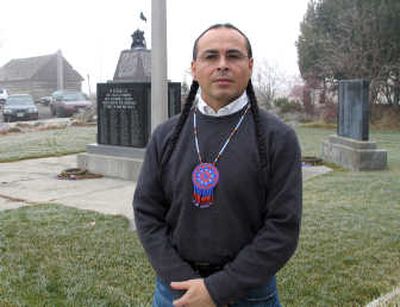

NESPELEM, Wash. – A declining national housing market has taken a toll on the Colville Indian Reservation, resulting in huge budget cuts, tribal government reorganization and political infighting.
But despite declining timber revenues, the Tribal Business Council this year provided each member of the confederated tribes with a semiannual check in time for Christmas. The “per capita” check to each of the tribes’ 9,300 enrolled members was reduced, however, from $500 to $300.
Meanwhile, eight tribal employees, including six division administrators, lost their jobs in the reorganization. They were among the tribes’ highest-educated members on a reservation where education is at a premium.
Now a group of tribal members led by the former employees, who claim their dismissals were politically motivated, are suing the council and demanding the ouster of the executive director who fired them.
“The Colville Business Council and some of its members and appointed employees created this ‘financial emergent’ situation to take political vengeance toward specific people within tribal government,” said John Sirois, former administrator of the tribes’ cultural preservation division.
Sirois and the other ousted administrators were given their two-week termination notices on Nov. 2. That was the day after the Tribal Business Council, with only nine of its 14 members present, approved a 2008 budget of $24.9 million and a reorganization plan to make possible the 22 percent decrease from the 2007 budget.
The reorganization consolidated the six divisions under three “super divisions,” which are headed by recently appointed employees. Sirois said these new positions, as well as the creation of a new human resource director, undercut whatever savings were realized from terminating the division heads.
Besides Sirois, the other division heads who lost their jobs are tribal health and human services administrator Martha Holliday, economic planner Kyle Desautel, operations manager Gary Joseph, education and employment director Charlanne Quinto, and purchasing manager Nikki Dick.
The tribal government helped many of these employees obtain their college educations, including advanced degrees, through a scholarship program, which also was “substantially” scaled back in the reorganization, Quinto said.
“The tribe has always been generous,” Quinto said, “but we are concerned about the future.”
Tribal politics
Of the nine Tribal Business Council members present for the Nov. 1 council meeting, three members voted against the reorganization. The council chairman, Michael Marchand, votes only in the event of a tie.
The six members who approved the plan represent the Inchelium, Keller and Omak districts, a fact that has since prompted charges that the vote was the result of a vendetta against the Nespelem district – the home of all but one of the employees who lost their jobs, according to Sirois and others.
Members of the council are elected from four voting districts based on the aboriginal territories of the 12 bands that comprise the Colville Indian people. There are four council members each from Inchelium, Nespelem and Omak, and two members from the Keller district.
The tribes’ interim executive director, Carleen Anderson, who authored the reorganization plan, was accused of politicizing the budget process in a letter from Marchand to her and council members.
In the Nov. 30 letter, Marchand condemns Anderson’s conduct during an Omak district meeting at which she was alleged to have made “statements intended to turn Omak District members against Nespelem District members” and “accusing the Nespelem District members of getting more than their fair share of tribal benefits and programs.”
Marchand called for Anderson to immediately resign. She did not.
At a special session on Dec. 6, the Tribal Business Council deferred a vote on Anderson’s dismissal despite demands for her ouster by many tribal members attending the standing-room-only meeting at tribal headquarters in Nespelem.
According to Sirois, who was present at the meeting, the council feared “violating the executive director’s rights of due process,” since she was not present. Anderson was unavailable for comment Friday.
Court actions
The Tribal Business Council is already facing a lawsuit filed in Tribal Court by the terminated employees who claim their civil rights and tribal policies were violated. Two of the employees, Joseph and Dick, were escorted from their offices on Nov. 5 by tribal police at Anderson’s request, according to Joseph, who is under a restraining order that prevents him from being in the same room with Anderson.
Marchand said the council does not involve itself in the hiring or firing of tribal employees other than the executive director and some tribal lawyers. Though limited in what he could say because of the pending legal action, Marchand said none of the terminated employees was accused of any wrongdoing or incompetence.
“It was not a matter of performance, but organization,” the chairman said. “I have no doubt they will land on their feet. I wish it was with us.”
Marchand stressed that as far as the budget is concerned, “We are talking about shortfalls, not a deficit. We are not in the red.”
While the tribes’ three casinos and construction company are profitable, he said, timber revenues have declined with the housing market. “We also have problems with log supply and getting access to trees” for the tribes’ Omak sawmill.
Marchand said the tribes should have started setting aside the per-capita payments to tribal members five years ago to invest in new business development, a politically unpopular idea on the impoverished reservation, where many count on their checks, particularly this time of the year.
“We are guilty of being short-sighted,” he said. “We need to be more conservative now so the per capita will grow in the future.”