
Plan seeks medicine database
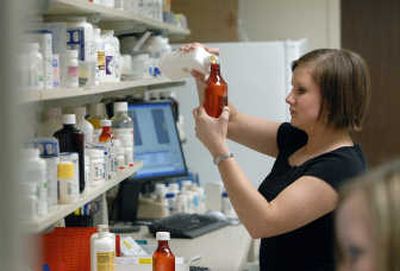
Several years ago, an aunt of Washington Gov. Chris Gregoire wasn’t feeling well.
The family became concerned and asked that she be admitted to the hospital. When the medical team finished reviewing her condition, they determined her prescription drug regimen was to blame.
The aunt had several doctors and multiple medications that when taken together lowered her quality of life, said Gregoire.
It’s a problem faced by many people as the proliferation of drugs for all manner of maladies grows, said Mike Wilson, president of Sacred Heart Medical Center.
To address the problem, Gregoire introduced a $1.4 million plan Friday to build an online database that doctors and pharmacists could access to determine the prescription medications their patients are taking.
The money is part of a $7.9 million patient safety initiative Gregoire plans to include in her 2008 budget proposal next week. It’s a fraction of the $1 billion the state will spend this year for health coverage.
Gregoire has been rolling out snippets of her budget proposal all week, and Friday she outlined five ways to improve patient safety at a press conference at Sacred Heart Medical Center.
She said she’ll also press for the public to have full access to individual hospitals’ patient safety track records. The “adverse events” reports will be part of legislation she is seeking that will be hospital-specific. The state Department of Health had disclosed those hospital errors for more than a year, before ending that practice earlier this fall. After a public outcry, the department said it would reinstate those reports, although it would require legislative action to do so.
In her remarks, she said full disclosure would help health care systems learn from mistakes and prevent future problems.
Other initiatives include:
“ $3 million to help pay for some hospital workers who want to train to become registered nurses.
“ $2 million more to investigate complaints against health care providers and alleviate a backlog of cases.
“ $930,000 to bolster the state’s ability to perform criminal background checks on all out-of-state applicants for health care jobs.
“ $560,000 to improve and change the state’s licensing standards for counselors. Currently, anyone can call themselves a counselor if they provide contact information, pass a criminal background check, pay a fee and take an HIV/AIDS safety class. No education or other training is required.
Mike Wilson, president of Sacred Heart, called the aggregate proposal a positive development.
“All of these are things that can help patients,” he said, noting the importance of the prescription drug database. Patients are the only information clearinghouse for their medications, and sometimes they forget or fail to list their prescriptions.
It’s an issue also emphasized by AARP, which encourages its members to seek a sort of “prescription drug audit” to ensure they are not taking medications that may cancel each other out or make them ill.
The extra money would be drawn from the state’s $1.4 billion surplus, Gregoire said, without affecting the $450 million being routed into a rainy day account or cutting deeply into money being set aside in a reserve account.