
Winter wonderland
Yellowstone National Park becomes a white, crystalline jewel in the winter. Snowmobiling in and around the park will open up a new and beautiful landscape that few visitors venture out to see.
Often in January at 8 a.m. it’s around 20 below zero at 7,000 feet elevation. Cold enough that exhaled breath hangs in the air like puffy white clouds. Boots squeak on top of the dry powder snow. Hoarfrost in the form of tiny, sparkling diamonds, slowly float down in the clear crisp air. Walking up to, mounting a snowmobile and acknowledging the cold, the first reaction might be, “What am I doing out here?” But an incredible experience and landscape is about to unfold for those who are willing to make the effort.
Snowmobiling in Yellowstone has been not a cold, but a white-hot environmental issue. In the past, a steady line of snowmobiles roared around the snow packed trails that serve as roads in the summer. In the 1990s as many as 1,400 machines a day entered the park. Rangers, inhaling the potent carbon monoxide fumes all day at the entrance gates, often became sick by the end of their shift. The snowy trails, rutted and washboarded from the thousands of snowmobiles, made the bumpy travel uncomfortable. By the end of the season, the snow-white trails had become black from exhaust of old two-cycle engines. In a word, snowmobiling had become unacceptable to the park administrators. Inside and outside the park, individuals and environmental groups pushed to eliminate the machines completely.
In 2007, recognizing the economic and political realities of a complete ban, a new park proposal was implemented that has eliminated many of the past problems. To the chagrin of many residents that live near the park, individuals could no longer enter the park without a hired guide. All visitors wanting to go in the park were restricted to two means of winter motorized travel: snow coach or guided groups of snowmobiles. The snowmobiles were required to be quieter, less polluting four-stroke engines. The park would allow up to 720 machines a day, but with the new rules in effect it is expected that at least for now less than 250 machines per day would enter the park. Consequently, today’s winter snowmobile visitors get a much cleaner and quieter wilderness encounter.
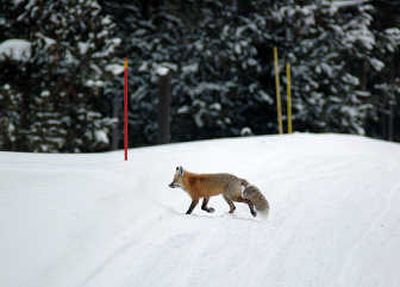
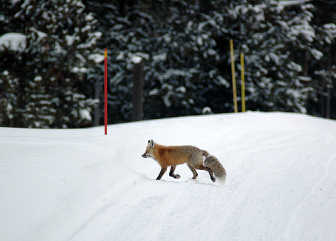
That said, most anyone who hasn’t ridden a snowmobile is in for a time of their life. Traveling part of the park on a machine that provides a 360-degree view of the wild animals and landscapes is unforgettable. Passing herds of elk and bison with their thick coats frosted by snow is an amazing sight. Spotting wolf tracks or even a pack of wolves is a very real possibility. Because of the frigid air, the hot springs and geysers provide enormous amounts of steam that amplifies their geothermal properties. Unexpected animal sightings like a red fox against a white background or a coyote leaping high in the air as they hunt for mice in the snow will keep riders looking for more.
The issue of staying warm, surprisingly, is not much of a problem. In extremely cold temperatures (minus 40-50 degrees) the trips are canceled because of the danger of frostbite on the face. Those temperatures don’t happen very often in Yellowstone. Otherwise the snowmobile company provides all the clothing required to keep you warm except for underwear. The clothing list includes a lined, snow repellant coverall with boots, jersey, gloves, knitted cap and helmet. The handlebars on the snowmobile are heated and heat from the engine warms the insides of the legs. The Park Service has placed warming huts at various locations where visitors can stop, take a break and get close to a warm wood stove.
Underwear should not be made of cotton. Rather, a synthetic fabric that wicks away moisture is highly recommended. Another lightweight pair of gloves that can be worn under heavy gloves is a good idea for extra warmth and flexibility when taking photos.
There are three options for accommodations and snowmobile outfitters.
West Yellowstone: This town calls itself the snowmobile capital of the world. It is well prepared for winter visitors with motels, restaurants, and outfitters. It also is the closest portal to reach from Idaho. Snowmobiles are legal to drive on most of the snow-packed streets. There are several snowmobile outfitters in town to choose from. West Yellowstone also offers miles of groomed trails outside the park boundary that extend into Idaho and with high mountain views of the Teton Mountain Range. Outside the park, snowmobiles can be rented with or without a guide. Finding your own room and snowmobile guide can save money compared with snowmobiling deals in the Park.
Snow Lodge: A snow coach ride from West Yellowstone delivers visitors to Snow Lodge within a short walking distance from Old Faithful Geyser. While staying at the lodge, snowmobiles with guides can be rented from Xanterra who operate the lodges and restaurants in the park. There are several package options that are available. One choice is “Guided Snowmo-deal at Old Faithful.” The package includes two nights of lodging, at the Snow Lodge, two breakfasts per person, a welcome gift, a one-day guided snowmobile tour (including snowmobile clothing) to the Grand Canyon of the Yellowstone or Mammoth and a discount card for the gift shops. Rates start at $365 per person double occupancy.
Mammoth Hot Springs Hotel: Located just south of Gardiner, Mont., this is the only park hotel accessible in the winter for automobiles. Xanterra also offers snowmobile tours in Yellowstone from this hotel. Snowmo-deals similar to Snow Lodge are offered but there is not the expense of arriving by snow coach. Also the rates per person start at $205.
Yellowstone in the winter may seem like a cold, inhospitable place to visit. Rather, it provides a spectacular trip where warm accommodations and outdoor activities like snowmobiling are a fun, comfortable combination. Yellowstone National Park really can be on your winter calendar this year.