
Destination: 2008
Travel in 2007 was marked by rising gas prices, new passport rules, record lows for the dollar and record-high airline business. In 2008, experts say, Americans may take shorter trips or choose destinations closer to home, where their dollar goes further. But they will still travel. The Conference Board’s most recent consumer survey found 45.8 percent of Americans intend to take a vacation within six months, down just a tad from 46.4 percent a year ago.
“When there’s a slowdown in the economy, travel only slows slightly,” said Douglas Shifflet of D.K. Shifflet & Associates, which tracks travel trends.
“The amount of time people spend on vacations and in hotels is hit harder. They make tradeoffs; they stay closer to home or with friends and relatives.”
Visits to national parks were up 1.3 percent from January through September, compared to 2006, with Yosemite and Yellowstone adding more than a quarter-million visitors.
Lonely Planet, the guidebook publisher, picked the U.S. as its No. 1 destination for 2008.
“The euro has made it expensive for U.S. travelers to take their European dream vacation, so they’re looking at their own backyard paradise, with holidays that include national parks and Hawaii,” says Lonely Planet spokeswoman Christina Tunnah.
“I think we’ll see an increase in domestic travel and people looking for really good deals – for example, places where they can stay four nights and get a fifth night free,” adds Amy Ziff, Travelocity editor-at-large.
For those traveling farther afield, international hot spots for 2008 include Beijing; Central America; Italy, Eastern Europe and Lisbon, Portugal.
Some details on how things are shaping up for the new year:
Air travel: The year 2007 is on track to be the busiest ever. Domestic airlines carried a record 582 million passengers from January through September, 3.6 percent more than the same period in 2006.
Perhaps as a result, 24 percent of flights arrived late from January through October, the second-worst delay total on record.
In 2008, if the system continues at capacity, “two-hour delays will become the new normal,” says David Stempler, president of the Air Travelers Association.
As a first step in cutting delays, U.S. Transportation Secretary Mary Peters has ordered a nearly 20 percent reduction in flights through New York City’s Kennedy Airport during peak times, beginning in March.
There will be more options on flights to London when the Open Skies Agreement takes effect March 28.
It allows a half-dozen carriers to add direct flights to Heathrow from Atlanta, JFK, Houston, Newark, Philadelphia, Dallas and Los Angeles.
Passports: The State Department issued a record 18.4 million passports in fiscal 2007, compared to 12.1 million in 2006. Thirty percent of Americans now hold passports.
The increase was spurred by new rules requiring passports for air travel to the U.S. from Mexico, the Caribbean and Canada.
Last summer, the time it took to get a passport doubled to 12 weeks; countless vacations were ruined when travelers didn’t get their passports in time.
The debacle led the State Department to publicly apologize. Processing times are now back to the normal four to six weeks. (See details at www.travel.state.gov/passport).
The U.S. Department of Homeland Security proposed that passports be required for land and sea travel from the Caribbean, Canada and Mexico starting as soon as next summer, but Congress passed legislation delaying that until at least June 2009.
Other acceptable documents would be the new passport card, due out in spring; enhanced driver’s licenses being pursued by several states; and “Trusted Traveler cards” from U.S. Customs and Border Protection.
Cruisers may get an important exemption: a proposal to allow U.S. citizens to sail to the Caribbean, Canada and Mexico without passports if they depart from and return to the same U.S. port.
Canada: Although Canada was the No. 2 destination for U.S. travel abroad in 2006, the number of Americans flying north continues to decrease, down 4 percent in 2006 and 3.4 percent in the first nine months of 2007, according to Commerce Department statistics.
The strong Canadian dollar and new passport rules regarding air travel didn’t help.
Still, with Vancouver hosting the 2010 Winter Olympics, Canada’s Pacific Northwest is on the radar for many travelers – especially powder-hounds.
Canada made it onto Lonely Planet’s top 10 list, and a Conde Nast Traveler reader survey named Whistler No. 1 in the magazine’s “Best Places to Ski & Stay in North America.”
Europe: Travel to Europe by Americans was up 2 percent in the first nine months of 2007 compared to the same period in 2006, according to the U.S. Department of Commerce.
But the weak dollar is having an impact. A United States Tour Operators Association survey found more than 50 percent of members reporting European bookings had dropped, some by as much as 20 percent.
“So many people have come back from Europe complaining about how weak their dollar is,” says Pauline Frommer, the travel writer and editor.
She says more travelers are seeking out alternative accommodations, such as renting rooms and private homes.
“It has to do with money, and it also has to do with the yearning to get out of the cookie-cutter vacation and see a more authentic side,” Frommer says.
Italy was named the No. 1 international destination by the U.S. Tour Operators Association for 2008, and Frommer says it’s the place travelers ask about most often on the call-in radio show she hosts with her father, Arthur Frommer.
Lisbon, Portugal, saw a 20 percent increase in American visitors in 2006, and had the biggest increase of any international destination in page views on Yahoo! Travel Guides.
“Lisbon is the last affordable European city and was our top mover in 2007,” says Fiona Lake Waslander, director of Yahoo! Travel.
Travelocity’s Ziff says bookings to Western Europe over the Thanksgiving holiday were down 4.4 percent in 2007 compared to 2006. But bookings to Eastern Europe are up more than 25 percent.
“The Ukraine is up 11 percent, Lithuania, Latvia and Slovenia are getting an increase and starting to register on my radar,” Ziff says. “They’re the next hot places.”
Latin America: Travel by U.S. residents in the first nine months of this year was up 8 percent to Central America and 7.6 percent to South America, according to the Commerce Department.
Why the surge? The dollar goes further in Latin America than in Europe, and “the old image of South American countries – dictatorships and machine guns – is gone,” said Bob Whitley, president of the USTOA.
“Instead, South America and Central America are the new hot destinations.”
Ziff says Travelocity bookings show “Guatemala is up considerably, Panama is a trendsetter destination and with Nicaragua, people are getting curious about what’s there.”
Yahoo! Travel also reports El Salvador and Panama among its up-and-coming destinations for 2008.
Asia: Travel to Asia by U.S. residents was up 8.6 percent the first nine months of 2007. China was the 10th most-visited country in 2006 by Americans traveling abroad, according to the Commerce Department.
CoSport, the authorized ticket broker for Beijing’s 2008 Olympics, reports “high demand and limited supply” on its Web site. As of mid-December, nothing but tickets for handball were available to Americans.
Vacation activities: “American consumers are sight-doing, not just sightseeing,” says the USTOA’s Whitley.
Frommer agrees: “Yes, you want to see the Louvre, but people are taking the time to take a cooking class or a wine-tasting. In Paris you can even take a Rollerblade tour.”
There’s also a trend toward specialization on tours: women-only tours, religious tours, even knitting tours.
(For Rollerblade and knitting tour details, see www.pari-roller.com and www.stitchawaytours.com.)
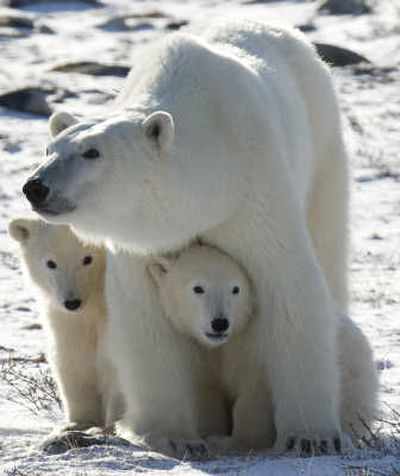
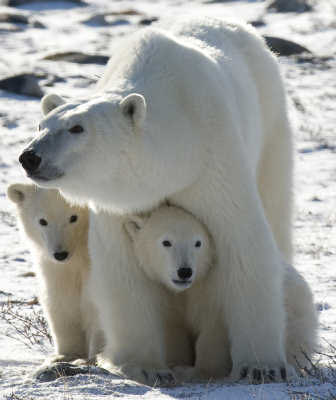
JWT, the largest ad agency in the U.S. (formerly J. Walter Thompson), lists “climate sightseeing” as a top travel trend for 2008. That means trips to see phenomena threatened by climate change, like glaciers in Alaska or polar bears in Manitoba, Canada.
“More and more people want to relish these wonders while they still exist in their current form,” says Ann Mack, director of trendspotting for JWT.
“And there’s a conversational currency that comes with that. You’re a more intriguing person the more obscure places you’ve been to.”
The number of visitors to Alaska has increased steadily in the past two decades, with 2 million visitors last summer, a 3 percent increase over the previous year.
“Kilimanjaro has been a recent hot destination because of its melting glacier,” says Yahoo’s Waslander.
While National Geographic Expeditions tours are up 35 percent in the last year, the number of travelers signing up for its Alaska trips increased by 63 percent and Antarctica, 68 percent.
Participation in Arctic Norway, a polar bear-watching trip, has doubled.