
Relative calm greets Saddam anniversary
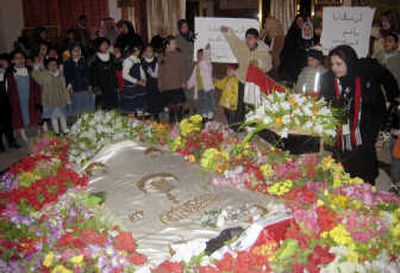
BAGHDAD – Hundreds of mourners visited the tomb of Saddam Hussein on Sunday to light candles and recite the Quran in memory of the ousted dictator hanged a year ago.
Security forces braced for possible attacks in Baghdad and the Sunni Arab heartland north of the capital, where Saddam’s chaotic execution heightened the alienation many Sunnis feel under Iraq’s new Shiite rulers.
Driving bans were imposed in the cities of Baiji and Dour to ward against car bombs, and extra checkpoints went up in and around Tikrit. But there were no reports of violence associated with the anniversary.
Many Saddam loyalists have joined forces with U.S. and Iraqi troops in the past year to fight the religious extremists they once tolerated, a decision U.S. officials credit with helping to reduce bloodshed across the country by 60 percent since June.
In Al Auja, Saddam’s birthplace on the outskirts of Tikrit, schoolchildren lit candles in the hall where the dictator was laid to rest. Hundreds visited the tomb – decked in flowers and the Iraqi flag – but it was a far cry from the crowds of thousands that Saddam could command in his lifetime.
Residents chafed at the beefed-up security presence in their village.
“We were surprised with these measures taken by the government, curfews in some areas and the blockage of various streets,” said Thamer Baker, an unemployed former civil servant from Saddam’s Albu Nasir tribe. “Why? Do they fear us? Where is the democracy they talk about?”
In the chaos of competing armed factions and near-daily bombings across Iraq, there are some who hanker for the comparative stability of his brutal regime.
“He was not a dictator,” said Saif Nateek, a policeman from Saddam’s tribe. “He was able to keep this country united, to hold it with a firm grip.”
Members of Iraq’s Shiite-led government had hoped the execution would unite the country and lay the past to rest. Instead, footage showing Shiite onlookers taunting Saddam as the noose was placed around his neck sparked outrage among his fellow Sunnis.
The grainy images, which were captured on a cell phone and posted on the Internet, fueled a day of bloodshed last year that killed at least 78 people.
Saddam was executed for the killings of 148 Shiite men and boys from the town of Dujail after a 1982 assassination attempt, a fraction of the tens of thousands of deaths during his nearly four-decade rule. He is buried near his sons, Odai and Qusai, and 14-year-old grandson, Mustafa, who were killed in a 2003 gunfight with U.S. forces in the northern city of Mosul.