
Justice gives Congress spying program documents
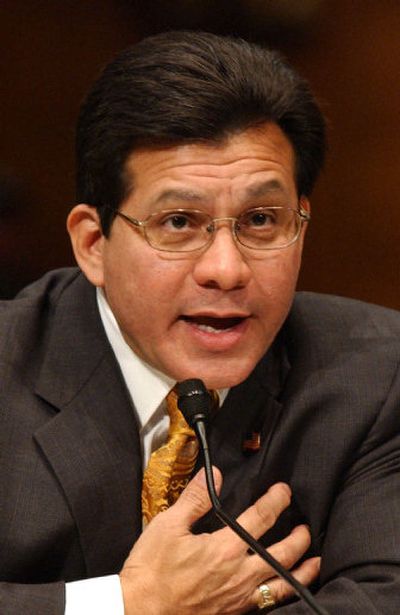
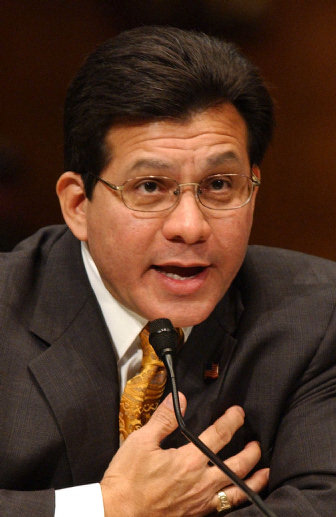
WASHINGTON – The Justice Department turned over documents on the government’s controversial domestic spying program to select members of Congress Wednesday, ending a two-week confrontation that included pointed threats of subpoenas from Democrats.
The deal appears to resolve the latest conflict between Congress and the administration over the National Security Agency’s surveillance effort, and provides new evidence of the administration’s more accommodating approach to the Democrats who now control Congress.
The agreement follows the administration’s announcement two weeks ago that it was shutting down NSA’s warrantless surveillance program and replacing it with a plan approved by the secret court that administers the Foreign Intelligence Surveillance Act, or FISA. The NSA had conducted the domestic spying for more than five years without such court oversight.
Under Wednesday’s accord, announced by Attorney General Alberto Gonzales, more than three dozen lawmakers will have access to the secret court orders governing the spying program that were issued on Jan. 10 and the applications from the Justice Department that preceded them. The lawmakers include the House and Senate leadership, the two intelligence panels and the heads of the two judiciary committees, officials said.
But Gonzales and other Bush administration officials also indicated they had no intention of making the orders and related documents available to the public. The lawmakers and staff who view the records will be subject to strict statutes that bar disclosure of classified information. Congressional aides said it was unclear how much new information could be shared with the public.
Sen. Patrick Leahy, D-Vt., chairman of the Senate Judiciary Committee, said the documents would help determine “what further oversight or legislative action is necessary.
“Only with an understanding of the contours of the wiretapping program and the scope of the court’s orders can the Judiciary Committee determine whether the administration has reached the proper balance to protect Americans while following the law and the principles of checks and balances,” Leahy said.
Gonzales – in remarks to reporters during an unrelated event – played down any conflict with lawmakers, saying, “It’s never been the case where we’ve said we would never provide access.”
Gonzales said the orders cannot be released publicly because the subject matter is “highly classified.”
One Justice official said Gonzales had decided two weeks ago that both the intelligence panels, along with Leahy and Arlen Specter, R-Pa., ranking member of the Judiciary Committee, should have access to the records.
Shortly after the Sept. 11, 2001, attacks, President Bush authorized the NSA to monitor telephone calls between the United States and places overseas without warrants if one of the parties was believed to be linked to al-Qaida or related groups. The program’s existence was disclosed in media reports in December 2005.
Many lawmakers and civil liberties advocates called the program illegal, and a federal judge in Michigan ruled in August that it was unconstitutional and should be halted. In oral arguments in an appeal of that case Wednesday before the 6th Circuit U.S. Court of Appeals in Cincinnati, government lawyers said the lawsuit should be thrown out because of the new FISA orders.