
Gonna fly now
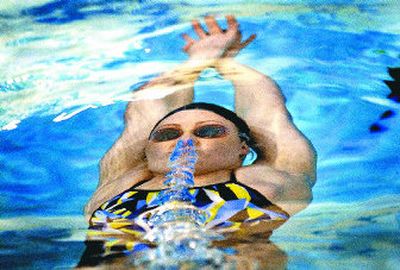
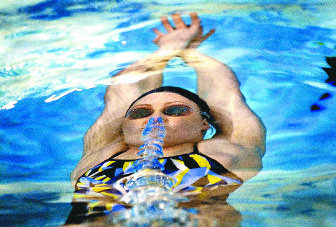
There isn’t much about the 200-yard butterfly that appeals to swimmers.
It lacks the thrill of the sleeker, sexier 100 freestyle. It doesn’t have the panache of an individual medley. In fact, the race seems to exist only to punish those willing to attempt it.
Samantha Kephart wanted no part of it.
“I always told my old coach if he puts me in the 200 fly,” she said, “I’ll quit swimming.”
That notion is almost laughable now.
A junior at Whitworth, Kephart is the defending national champion in both the 100 and 200 fly. She set an NCAA Division III record at last year’s national championships finishing the 200 fly in just 15-hundredths of a second more than 2 minutes. Add in an eighth-place finish in the 500 free, and Kephart alone finished with 51 points, a mark better than all but 21 teams in the national meet.
That doesn’t mean the 200 fly still isn’t intimidating – even for the school’s first national champion at the Division III level and the national record holder in the event.
“I think the butterfly is the hardest stroke,” she said. “I’m nervous every time I swim the 200 fly because I think it might be the one (race) I don’t finish. When you get done, you realize how hard it was.”
Kephart and the Pirates will compete Friday through Sunday in the Northwest Conference Championships in Walla Walla. Whitworth is primed to end Puget Sound’s 10-year reign as conference champion. The Pirates women won the conference’s regular-season title with a 7-0 record in NWC dual meets.
Whitworth coach Steve Schadt said Kephart’s influence extends beyond an Olympic-sized pool.
“She’s been a program changer for us,” Schadt said. “Since she joined the team, the program has come together in a lot of ways. She’s helped us recruit faster athletes into the program with the ability she brings.”
Schadt said a butterfly swimmer must have a solid “upper-body core” and have the arm strength to propel out of the water on each double-armed stroke.
He said Kephart’s underwater kick is as impressive as any he’s seen and even marveled at her ankle flexibility and strength.
Kephart’s broad shoulders and muscular upper torso are an eye-popping testimony to her work ethic and unwavering devotion to becoming one of the nation’s elite swimmers. A serious back injury suffered last summer has hindered her performance this year, but her best times in the 100 fly (58.06) and 200 fly (2:07.51) easily rank first in the NWC and would have placed in the top dozen at last year’s national championships.
This year’s national meet is slated for March 8-10 in Houston.
“Last summer I tore a ligament in my back,” Kephart said, adding that a magnetic resonance imaging exam revealed three herniated discs in her lower back that will require surgery after her college career is over. “I know I’m not where I was at this time last year. I’m not going to sugar-coat it. … I’m pretty close, and I feel like I’m on the right track.”
“It’s a wait-and-see approach for us,” Schadt said. “She’s had a lot to overcome. She does not like to lose. For her to have an injury has been extremely frustrating for her.”
No rehabilitation machine could be as therapeutic as another national championship – or two.
“My goals are to win the 100 and 200 fly again, and I hope I can improve my record,” Kephart said. “I work every day to achieve my goals. If I win this year, yeah, it would be a surprise. I’m not cocky, and I don’t want to sound like it, but last year wasn’t too surprising. Every single meet I swam in was really good. I was consistently dropping times.”
Schadt believes the adversity may have given Kephart an added appreciation for the sport.
“In the long run,” he said, “I think it will make her a better swimmer.”