
A season of change
CHARLOTTE, N.C. – Buckle up, race fans, for a season that promises to be like nothing seen before.
With the mandated Car of Tomorrow, changes to the Chase for the championship, Toyota’s arrival, ESPN’s return and the introduction of former Formula One driver Juan Pablo Montoya, 2007 will prove this ain’t your daddy’s NASCAR.
This season will be a pivotal one for NASCAR, which looks to rebound after a mediocre 2006 that saw television ratings slip and made many wonder if the sport had reached its plateau.
But NASCAR chairman Brian France hasn’t strayed from his belief that all is well in his family-owned business.
“We’re in a very strong position,” he insisted. “We are still the No. 2 sport on television. Promoters continue to enjoy great ticket sales throughout the year, and I know 2007, with all of the things that are going on, will make for an exciting season.”
It starts this weekend at Daytona International Speedway, where the best of the Nextel Cup Series will kick-start the season with Saturday night’s exhibition Budweiser Shootout.
Preparations begin the next day for the Feb. 18 season-opening Daytona 500. The race will mark the first time a Japanese automaker will take the green flag in NASCAR’s top series as Toyota’s expected to have at least a handful of its Camrys in the field. Seven different drivers will race Camrys this season, including two-time Daytona 500 winner Michael Waltrip and 1999 Cup champion Dale Jarrett.
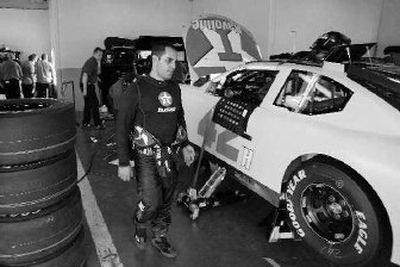
The race also will include Montoya, a native of Colombia who will be the only non-white driver in NASCAR’s top series this season. A former CART champion, Indianapolis 500 winner and popular F1 driver, Montoya is starting what is expected to be a bumpy transition from open-wheel dominance to stock-car struggles.
An aggressive and outspoken driver, he’s also proven to be a quick study, leading many to predict he’ll visit Victory Lane at least once this season.
“This is a learning process for me, and there’s no rush for me to be perfect,” Montoya said. “But I am also not here for fun. This is serious business, and I plan on winning races.”
Montoya is expected to bring new fans to NASCAR, and they’ll have no problem finding him as he’ll be featured heavily on satellite radio and television.
NASCAR is ramping up its exposure through Sirius Satellite Radio, which has an entire NASCAR channel that will provide flag-to-flag coverage on race day, and by welcoming back ESPN after a long hiatus.
ESPN was one of NASCAR’s original broadcast partners, but the network was frozen out of coverage in the 2001 package that awarded the TV rights to Fox and NBC.
But the sports network is back with a vengeance, promising to devote hours upon hours of air time and a nightly “NASCAR Now” news program.
“A lot has changed at ESPN since we did our last race in 2000,” said John Skipper, vice president of content. “We no longer think of the races as a three-hour event. We think of the races as an opportunity for us to establish ESPN as the 24-7 home of the NASCAR fan.”
The network also will be home to the Busch Series, promising NASCAR’s junior varsity the first stable programming schedule in its history.
It comes down to winning, as NASCAR puts an emphasis on finishing first through tweaks to the Chase format.
NASCAR always has been an exercise in consistency, with most drivers content to settle for a top-10 finish. But France hopes to change that by awarding five more points for victories this year.
Those wins also will be good for bonuses when the Chase begins – for every victory scored during the “regular season,” a driver will get a 10-point cushion to be used in seeding the playoff field.
“We’re very careful with our fan base and loyalties, and we’re not going to squander that away,” he said. “We’re going to make changes that we think they’ll like, and that enhance competition on the track first and foremost. That’s where it starts for us.”