
City office a link to neighborhoods
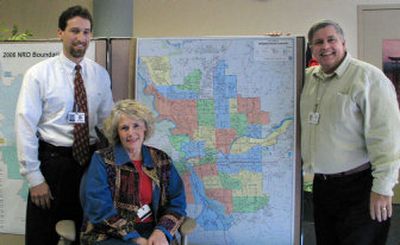
There is a small office on the sixth floor of City Hall that is dedicated to the idea of keeping Spokane’s 27 neighborhoods flourishing.
The Office of Neighborhood Services can help residents with concerns ranging from graffiti to abandoned cars and from potholes to boarded-up buildings, and acts as a liaison between them, their neighborhood council and city government.
And if the employees there can’t help, they can refer citizens to someone who can.
“We are the repository for all things neighborhood,” said Greg Hecht, director of the office.
Staffed by Hecht, clerk Sandy Johnson and public information coordinator Rod Minarik, the office provides neighborhood councils with the computers and postage needed to publish two newsletters a year.
They help the councils write grant requests, since there is no funding for the councils, deal with public safety and code concerns and provide mediation and conflict resolution at council meetings if needed.
They also help coordinate the Clean-Up Program, in conjunction of the Department of Solid Waste Management, which provides neighborhoods credit of up to $5,000 for Dumpsters, large appliance pickup, curbside pickup or dump passes.
The office also coordinates the Pedestrian Safety and Traffic Awareness program in which anyone can buy $10 yard signs that remind drivers to slow down.
Every neighborhood council has its own Web site, which each council maintains, that is part of the office’s Web site, www.spokaneneighborhoods.org,whichupdatesresidentsaboutwhatis happening in their own neighborhoods.
Users can plug in their address to not only find their council meeting dates but also to learn which schools their children will attend, which voting precinct they belong to, whether their neighborhood is in a historic district, what day garbage is picked up and which City Council district they belong to.
The office informs residents of city projects that affect them and relays neighborhood concerns and ideas to city leaders.
“They are very smart,” Hecht said of the citizens. “If you give them details on facts and figures, they may not agree, but they’ll understand why.”
The office was created by city ordinance in 1996 as part of a grass-roots movement to get residents involved in issues that affect their communities. It’s part of the city’s Economic Development Department.
“The neighborhoods drive economic development,” Minarik said.