
GM focuses energy on gas-electric model

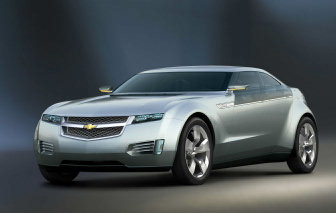
DETROIT – General Motors Chairman G. Richard Wagoner Jr. on Sunday unveiled a gas-electric prototype, the Chevrolet Volt – a plug-in vehicle that could get 150 miles per gallon – as the world’s automakers take on global warming and U.S. dependence on foreign oil.
Wagoner’s announcement underscores the depth of GM’s previous miscalculation on alternative vehicles and the degree to which the U.S. automotive landscape is changing. In 1990, GM introduced the concept of an all-electric car, the EV1. The vehicle made it to U.S. consumers but didn’t survive through the decade.
GM hasn’t given a date when consumers can buy the Volt because the advanced lithium-ion batteries needed to power the vehicle – similar to technology used in cell phones – are years from widespread use in automobiles.
Still, Wagoner and other GM executives have pledged to give the electric-car technology high priority within the company’s massive product development operation.
“In the end, this is all going to be about delivering on these products,” Wagoner said.
The world’s auto executives meeting at the Detroit auto show say any big push into alternative vehicles will have to come from the automakers. The executives said it isn’t clear yet what role Washington will play under the new Democratic-controlled Congress. Some Democrats have proposed higher federal fuel economy standards.
Wagoner reacted strongly to calls from Washington lawmakers for government-mandated increases to as high as 40 miles per gallon from the current level of 27.5 mpg for passenger cars, with a lower level for trucks.
“That’s simply impossible,” he said.
Wagoner and other executives said the industry is doing its part to confront the nation’s energy problems through bigger investments in advanced technology.
Analysts in Detroit say any moves in Washington could come to a standstill, given the auto industry’s unified lobbying position against major increases in fuel efficiency.
“The new Democratic Congress does not weaken the lobbying ability of U.S. automakers,” said Sean McAlinden, an economist with the Center for Automotive Studies in Ann Arbor, Mich.
“With new plants in Mississippi and Texas, they gain a couple of new senators. With the push for ethanol, you gain a couple of ag-state senators in places like Iowa and Nebraska.”
GM put its electric-car plans back on track after being stung by the rising gas prices after Hurricane Katrina in 2005. Higher gas prices ended the boom in sales of large SUVs, which have supported the Detroit automakers. They’ve watched from the sidelines as the Prius gas-electric hybrid has brought a windfall of positive attention for the Toyota brand.
“The domestic industry spends hundreds of millions to cultivate image,” said Harley Shaiken, an economics professor at the University of California at Berkeley. “What they’ve been slow to realize is that fuel efficiency is increasingly sexy to many Americans. Even if you don’t buy a Prius, you have the sense that Toyota is with the program.”