
After 25 years, Komen nears $1 billion mark
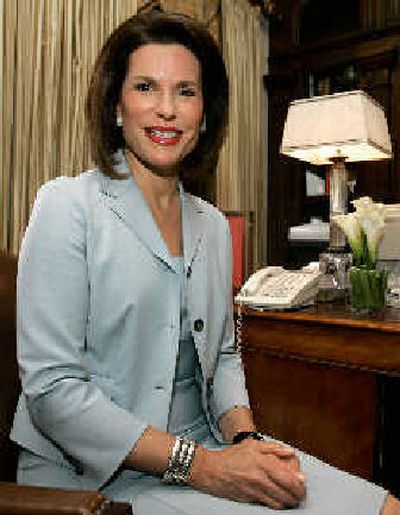
DALLAS – As breast cancer ravaged her body, Susan Komen asked her younger sister for a promise.
Komen wanted help to “cure this disease.” After a three-year struggle, the young mother with the bright smile died in 1980 at age 36. And her sister, Nancy Brinker, kept her promise to do something, founding the Susan G. Komen Breast Cancer Foundation two years later.
“I knew it had to be big. We had to change a culture,” Brinker said.
In the 25 years since, the foundation has grown from a small gathering of women in Brinker’s living room to a world-renowned operation that will have invested roughly $1 billion in community outreach and research by year’s end.
The Dallas-based organization has 200 employees, more than 100,000 active volunteers and 125 affiliates. Its annual Race for the Cure has grown from 800 women who ran for charity in Dallas to about 1.5 million participants in 120 races worldwide. The foundation has funded work in more than 47 countries.
The nonprofit is celebrating its 25th year with a new name – Susan G. Komen for the Cure; an edgy new advertising campaign that includes T-shirts reading: “If you’re going to stare at my breasts, you could at least donate a dollar to save them”; sales of pink promise rings; and a pledge to raise another $1 billion in the next 10 years.
With the help of organizations like Komen and prominent figures like former first lady Betty Ford, who spoke openly about her experience with breast cancer in the mid-1970s, the culture slowly began to change from breast cancer being a taboo subject, said Dr. Gabriel Hortobagyi, president of the American Society of Clinical Oncology.
“I grew up at a time when most families didn’t talk about either sex or cancer,” said Hortobagyi, chairman of the department of breast medical oncology at the University of Texas M.D. Anderson Cancer Center in Houston. “Those were sort of taboos. It was sort of shameful if anyone in the family had cancer. And people didn’t talk about breasts, either healthy or sick.”
Today, the Komen Foundation reports: Nearly 75 percent of women older than 40 get regular mammograms compared to fewer than a third who got breast exams in their doctor’s offices in 1982; the five-year survival rate for breast cancer when caught before it spreads is 98 percent compared to 74 percent back then; and the federal government devotes more than $900 million each year to breast cancer research, treatment and prevention compared to $30 million in 1982.
“I truly believe if Nancy hadn’t started this thing, that would not be the case, it just needed that special focus,” said Hala Moddelmog, president and chief executive officer of Komen.
The Komen organization says it is second only to the U.S. government as a source of funding for breast cancer research and community outreach programs, which include education, screening and treatment. It says about 84 cents of every dollar it raises is spent in those areas, totaling about $157 million this year.
This year the organization is refocusing its research money to concentrate on more focused areas, such as finding biological signs that can help predict cancer before symptoms appear.
Moddelmog said the goal is to support research that is “transformational and that definitely ties back to the cure.” Funding both research and community programs is important, said Moddelmog, herself a five-year breast cancer survivor.
“We’re helping to discover the cures by funding the research. And we’re helping to deliver the cures by providing access,” Moddelmog said.
There will be an international emphasis this year including a September summit in Budapest, where Brinker served as U.S. ambassador to Hungary from 2001 to 2003. The event will pair 25 U.S. activists with 25 people from around the world to look at the social, cultural and financial circumstances that prevent women from getting quality breast health care and treatment.
Hortobagyi, who has had a close relationship with the Komen organization including receiving grants for projects and chairing its health advisory board, said the organization shows the power of a single person.
“It’s made a huge difference in how we approach breast cancer,” said Hortobagyi, who said Komen has served as a model for other disease advocacy movements. “It has been enormously influential.”
He also has a personal connection, having been part of Komen’s treatment team at M.D. Anderson as a young doctor.
While the advances made in the 25 years since Komen was formed are reason to celebrate, the organization’s ultimate goal – the eradication of breast cancer – remains unachieved.
About one in eight women will get breast cancer, and the disease is the second most lethal kind of cancer after lung cancers in women. About 41,000 U.S. women died of breast cancer last year. Worldwide, it kills about 370,000 women each year.
“When you look at where we are, we’re still not where our mission is, and that’s a world without breast cancer,” Moddelmog said.