
Auto parts go global
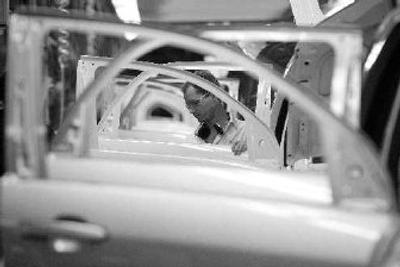
DETROIT — You’ve probably never seen the firewall, that slab of steel between you and the heat of your car’s engine, nor do you care about it.
But the way it’s designed and welded into vehicles may be the key to financial survival for U.S. automakers, and the key to how much you pay for cars in the future.
Currently, Ford Motor Co., DaimlerChrysler AG’s Chrysler Group and General Motors Corp. have dozens of firewalls.
But Toyota Motor Corp., the recognized leader in manufacturing efficiency, has only a few, and the only difference in those is the width. All the holes for wires and ducts are in the same place, and a worker at any plant worldwide can install one in almost any of Toyota’s models because they fit together the same way.
It’s the commonality of thousands of parts from the firewall to the frame, combined with standardized manufacturing techniques across the globe that make Toyota and Honda Motor Co. more efficient.
With losses piling up in Detroit, U.S. automakers are racing to become more efficient. Industry officials say consumers will benefit because car companies will dramatically reduce costs, resulting in stable prices, increased quality, more features and new models coming out at a faster pace.
“This is it for so much of everything else,” said Laurie Harbour-Felax, president of the Harbour-Felax Group, a Royal Oak, Mich., consulting company that has studied competitive differences between U.S. and Asian automakers. “It enables everything else in terms of competitiveness.”
The lack of common parts is one reason why Ford, GM and Chrysler made an average of $2,400 less per vehicle in 2005 than their Japanese competitors, according to a study by the Harbour-Felax Group released late last year.
Ford is the farthest behind, according to Harbour-Felax, but the company says it, too, is working to globalize its car parts and manufacturing.
GM now builds a small sport utility vehicle (the Saturn Vue and Chevrolet Equinox in the U.S.) with standardized parts in factories across the globe, and later this year will debut a globally designed and manufactured mid-sized car.
Company leaders saw the need for globalization in the 1990s and began moving in that direction, but a corporate bureaucracy that rewarded managers based on regional performance stood in the way, GM officials said.
GM, which lost more than $10.6 billion in 2005 and more than $3 billion in the first nine months of last year, was forced to change by need, said Jim Queen, vice president of global engineering.
“We saw the train wreck coming in North America many years ago,” Queen said. “You began to recognize that we could not afford to do vehicles the way we were doing them.”
Globalization picked up momentum in 2001, when GM hired industry icon Bob Lutz and gave him the mission of consolidating numerous engineering and design shops worldwide. Lutz, now vice chairman of global product development, found the company’s four global regions, North America, Asia Pacific, Latin America and Europe, operating independently.