
Lebanon protests turn violent
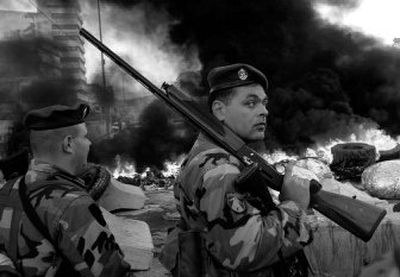
BEIRUT, Lebanon – Hezbollah-led protesters burned tires and cars and clashed with government supporters Tuesday, paralyzing Beirut and areas across Lebanon in the worst violence yet in the pro-Iranian group’s campaign to topple U.S.-backed Prime Minister Fuad Saniora.
At least three people were killed and dozens injured as the two camps battled each other around street barricades, throwing stones and in some cases firing guns. Black smoke poured into the sky from burning roadblocks.
The fighting quickly took on a dangerous sectarian tone in a country whose divided communities fought a bloody 1975-1990 civil war. Gunmen from neighboring districts in the northern city of Tripoli – one largely Sunni Muslim, the other largely Alawites, a Shiite Muslim offshoot – fought each other, causing two of the fatalities.
The day gave a frightening glimpse of how quickly the confrontation between Saniora’s government and the Iranian-backed Hezbollah and its allies could spiral out of control, enflame tensions among Sunnis, Shiites and Christians, and throw Lebanon into deeper turmoil.
In the evening, the opposition announced it would call off the roadblocks and the nationwide general strike that sparked the unrest, saying it had delivered a warning to the government. But it threatened more protests.
Opposition supporters began withdrawing from street blockades, leaving behind burning tires, concrete blocks and debris. At one abandoned roadblock in the north of Beirut, a fire engine extinguished the burning tires.
Suleiman Franjieh, a Christian opposition leader, told Hezbollah’s Al-Manar TV the next steps “will be nothing compared to what we saw today” if the government does not respond to the opposition’s demands.
The Hezbollah-led opposition is growing increasingly frustrated after two months of sit-in protests outside Saniora’s offices in downtown Beirut failed to force him to step down or form a new government giving the opposition more power.
Saniora vowed not to give in, saying in a televised address: “We will stand together against intimidation and to confront sedition.”
But he repeated his willingness to discuss a political solution to the impasse and called for a special session of parliament.
The violence called into question whether Saniora will be able to attend a conference of donor nations in Paris on Thursday aimed at raising billions in aid for rebuilding the devastation wreaked on Lebanon by last summer’s Israel-Hezbollah war.
Saniora has been expected to attend and the suspension of the strike increased the likelihood. But the government has not made a formal announcement about his travel plans.
Cabinet Minister Ahmed Fatfat told Lebanon’s New TV that the economy and finance ministers already were in Paris.
The money could boost the Saniora government. But months of political crisis have slowed the reconstruction effort, paralyzing the government – and if the chaos grows it could mean any new money won’t be properly used.
In Dubai, U.S. Undersecretary of State Nicholas Burns said the international community must support the Saniora government against “those who would destabilize it.”