
Deer Park school bond goes back to polls

Four.
That’s the number Deer Park School District Superintendent Mick Miller has been thinking about since 2005, when the district was four votes short of meeting the 60 percent supermajority needed to pass a construction bond to remodel Deer Park High School.
The defeat brought the number of times the bond failed to two.
Another number on Miller’s mind is 1979, the year the high school was built. Since then, there have been no major updates to the school in north Spokane County, including the addition of space to accommodate a burgeoning population.
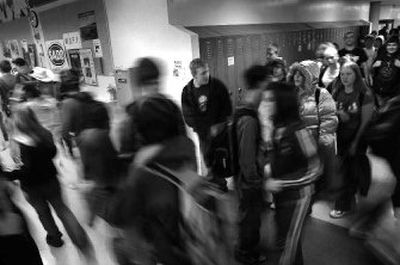
Deer Park is one of a few school districts in the area that continue to grow each year, with about 270 more students roaming school hallways over last year. The high school, built for 500 students, is now home to about 681 students, Miller said.
“We’re squeezed into every corner,” he said.
In addition, the heating ventilation, plumbing and electrical systems in the 27-year-old building lack capacity and are outdated and beyond repair.
On Feb. 6, the district will make a third attempt at asking voters to approve the bond to remodel the high school, this time for $24.08 million. Ballots for both Stevens and Spokane County residents – Deer Park draws taxes from both – will be or already have been mailed out.
“We are really at a critical point,” Miller said. “We really need to show to our community the value” of the remodeled school building.
After narrow defeat last time around, and in 2002, the district decided to go back and ask the community what it wanted a new high school to look like.
One of the reasons the bond failed twice before is that citizens “really didn’t know exactly what they were going to get,” Miller said.
A committee made up of citizens and school staff was formed in the fall to develop a design based on community input.
The design, completed by NAC Architecture, will add 48,000 square feet of space, including a second gym, a performing arts auditorium, 12 new classrooms and an area for music classes. The second gym and auditorium were both left out of previous designs.
The remodel would also create a central student common area, and new lockers would be installed. Right now backpacks don’t fit in lockers because the lockers are only six inches in width, “not even wide enough for a purse,” as one student put it.
The student bus and parent drop-off areas would be improved, to help with traffic flow. Currently buses and cars exit using the same driveway, and there is very little parking for visitors or staff.
A new, clearer entrance to the school also would be created.
Performances by students are currently held in the cafeteria, with moving bleachers brought in for seating. There is no scene shop or storage space for drama classes. Both would be added in the remodel.
“The neat thing about this remodel is the partnership with the community in recognizing that a high school really is a facility that is meant to be used by many, many people, not just students,” said Trip Goodall, Deer Park principal.
The school hopes that after the remodel, the library would be open evenings for the public, the health and fitness center would be open, as would the theater.
The second gym would also bring relief for athletic programs that have to share one space, as well as community groups that compete for the gym now.
“It’s always, always in use,” Goodall said.
The total project cost would be about $42 million, funded with bonds and $18 million in matching funds from the state. Loon Lake residents would vote on their portion of the bond – about $2.6 million – after the bond passed in Spokane County.
The bond issue would cost taxpayers $1.39 per $1,000 of assessed valuation, or $208 a year for a $150,000 home.
“Students look towards adults in a community to determine how they value education; part of that is updated facilities,” Goodall said. “It does an incredible amount to demonstrate support education in a district, and kids recognize that.”