
Building naturally
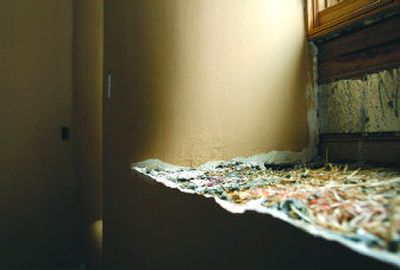
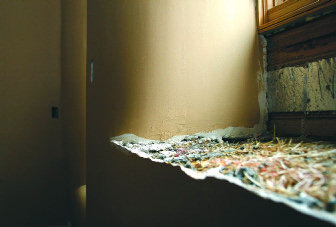
The yellow straw poking out from a small opening on the front porch says it all.
Dubbed a “truth window” in the environmental-housing vernacular, the little diamond-shaped opening on the front of John Brinton and Frieda Morgenstern’s new home gives passersby a glimpse into their nearly complete straw bale house.
It also says a lot about the homeowners.
“We’re actually really proud of ourselves for doing this,” Morgenstern says of their energy efficient, eco-friendly house near Manito Park on Spokane’s South Hill.
Engineered by local architect Kelly Lerner of One World Design, the couple’s straw bale house is one of a small but growing number of such structures in the Inland Northwest.
Although straw bale construction has been around for years – homesteaders used straw bales to build houses in western Nebraska as early as 1896 – it is increasingly the building material of choice for those who want well-insulated, energy-efficient homes made with natural materials.
Warm in the winter and cool in the summer, straw bale homes are affordable, durable, safe and comfortable. Which is precisely what Morgenstern and Brinton had in mind when they started planning their dream home.
Standing in the new garage, the retired couple reminisces with Lerner on the origins of their “green” house.
“In the ‘60s I was a hippie, and I got very excited about straw bales,” Morgenstern says. Some 40 years later her daughter’s interest in the architectural medium reignited her own.
“We started thinking about the possibilities,” she says. “Then we met Kelly.”
“And then I got you revved up,” says Lerner, an award-winning architect known for her environmentally responsible approach to design and a passion for the kind of natural materials and renewable energy sources that comprise the straw bale home.
The project broke ground last spring with the demolition of a small house situated on a lot adjacent to the couple’s current abode. Morgenstern described the tiny 1920s residence as “not remodelable.”
The new structure took shape last September when friends and neighbors gathered to help build the straw bale walls. Working with straw fresh from the Palouse, Brinton said the walls went up in a matter of mere days.
Now covered with a creamy layer of earth plaster, the thick walls curve back into window and door openings, “like you’re in some sensual sculpture,” Lerner says.
“They’re puffy, fat walls,” Morgenstern agrees. “It’s so maternal.”
Although straw bales make up the bulk of the home’s walls, Lerner used Rastra, an insulated concrete form made of 85 percent recycled material, in the foundation and garage of the home.
“It’s like used McDonald’s coffee cups,” she says.
Running beneath the home’s stained-concrete floors is a hydronic heating system used to warm the interior of the house.
“Everything but the pantry,” which is actually insulated from the rest of the home to help keep it cool, Lerner says.
Lerner also is using reclaimed doors and tile from old houses, and will include Morgenstern’s own intricate mosaic work in the kitchen, bathrooms and tile baseboards. Windows salvaged from the couple’s demolished home will add daylight to interior spaces, including bathrooms and closets.
Lerner says there are a number of solar efficiencies designed into the straw bale house for heating and cooling. Domestic solar hot water collectors will gather energy from the sun to heat the home’s water, and an on-demand water heater can be used as a backup.
“So they only have to heat the water they need,” Lerner says.
In addition, the architect left room to grow as more renewable energy technologies become available and more affordable in the future, such as photovoltaic panels that make electricity from sunlight.
“I like to design in as much flexibility as possible,” she says.
Lerner’s floor plan is equally agile. Although the home’s three bedrooms are split between two levels, all include bathrooms and walk-in closets.
“It’s almost like three master suites,” she says, noting that if Brinton and Morgenstern grow weary of climbing the stairs to bed every night, they could easily shift their master bedroom to the spacious first-floor guest suite.
“It’s designed to be a very flexible house,” Lerner said.