
Shorthanded state museum could lose accreditation
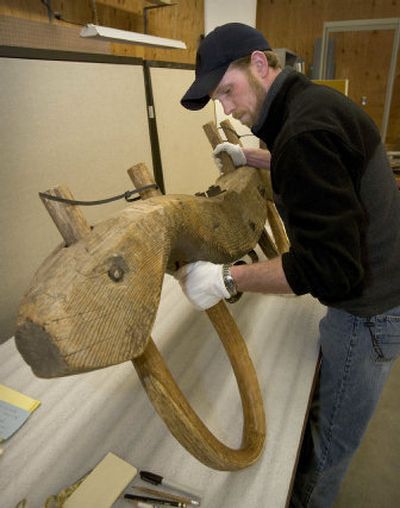
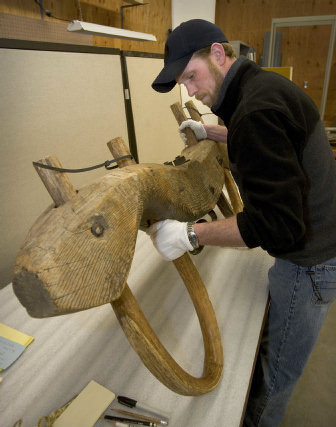
BOISE – Row by row, rack by rack, Idaho’s past rises to the rafters of the state Historical Museum warehouse.
There are 250,000 artifacts here: cowboy spurs and fragrant leather horse tack, vintage toys and dentist chairs, 19th century clothing, mining equipment, typewriters and woodworking tools. Hundreds more items arrived last year.
Missing are enough people to document a growing backlog, museum officials say.
A single curator has been on staff since layoffs in 2002, when lawmakers slashed the Idaho State Historical Society’s budget in an economic turndown. If more aren’t hired, the museum could lose the national accreditation it’s had since 1972, helping it to boost its credibility when applying for grants and to reassure other museums when it seeks loans for exhibits.
“We’ve been accredited for so long,” museum administrator Jody Ochoa said Monday during a tour of the warehouse. “To lose it would be kind of tragic.”
The Historical Society is asking lawmakers for $118,000 for two new curators starting July 1.
That’s a month before American Association of Museums reviewers come to Boise to scrutinize Idaho’s museum operation.
In discussions over renewed accreditation with the Washington, D.C.-based group that certifies 750 museums, Keith Petersen, the Historical Society’s interim head, says he can meet all its demands – except adding warehouse staff. “One person by himself cannot take care of the entire collection,” Petersen said.
The warehouse, several miles west of the museum, is home to an amalgam of Idaho’s past, from the brutal to the banal: World War II artillery shells, eight-track tape players from the 1970s, word-processing machines stretching from the manual typewriter to the computer.
From Idaho’s gold rush, the warehouse is home to delicate scales used by Chinese placer miners who worked over tailings in the ore fields around Pierce and Weippe.
There’s an “iron lung,” a cylindrical contraption that once helped polio victims in an Idaho hospital breathe.
Ku Klux Klan hoods from Payette are stored in acid-free boxes on a high shelf. The racist garb and accompanying writings and photos from the 1920s arrived on the museum’s doorstep two decades ago, courtesy of a man who found them in an attic.
Across an aisle, there are dozens of children’s toys: dolls from the late 19th century, Radio Flyer wagons, sleds, a carved wooden gun and a remote-control car shaped like a silver missile.
There’s a gown once worn by the wife of William Borah, the “Lion of Idaho” who spent six terms in the U.S. Senate.
And packed away in boxes are the execution hoods from the only double-hanging held at the Old Penitentiary near Boise: In 1951, Troy Powell and Ernest Walrath were strung up for the murder of Boise grocer Newton Wilson.
The American Association of Museums declined to comment for this story.
Still, other U.S. museums that have lost accreditation – and are now struggling to regain it – say its benefits include a sense of prestige, as well as the affirmation that professional standards are being upheld.
The Museum of Northern Arizona in Flagstaff lost its accreditation after it sold 21 objects in 2002 from its collection to finance an operating deficit, violating the association’s policies. It will likely be at least a year before it regains it, said Robert Breunig, the museum’s director.
“It was a real blow,” Breunig said. “You can’t imagine what it meant to us. We’re wanting to prove to the world that we are back, and what happened to us was just a blip, and we’ve corrected it.”
Officials hope it doesn’t come to that in Idaho. Adding two curators would help arrest decay of aging artifacts and improve upcoming museum exhibits, Ochoa said.
“We have a wonderful resource out here,” she said of the warehouse. “It would be nice to be able to share it.”