
Helping Hands: Volunteer looks forward to entries, handiwork
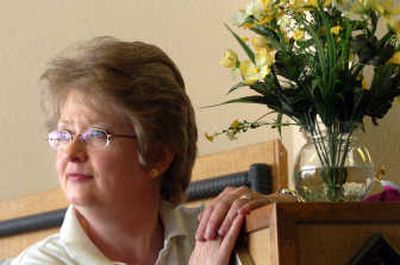

Lynee Richards’ love of sewing began at an early age.
“I started sewing at 9, made my own clothes and then made my kids’ clothes,” said Richards. “Back then, all my female relatives knew how to sew.”
Richards’ love of sewing has inspired her to volunteer as a sewing superintendent for the fifth straight year for the North Idaho Fair on Aug. 22-26.
“I’m anxious every year to see all the entries and expert handiwork,” she said.
Although Richards, a Post Falls resident, has believed for a long time that sewing is “cool,” the general public long has considered sewing to be a hobby just for older women.
As American women entered the work force in large numbers, they no longer had time to sew. Over time, sewing became a lost art.
But needles and thread are becoming “trendy” again. Media messages are encouraging people to learn to sew, and popular do-it-yourself TV shows such as “Trading Spaces” have sparked interest in what can be done with yards and yards of fabric.
At a time when family budgets are tight, do-it-yourself- shows stress that all you need is some imagination and a few sewing lessons.
“Sewing definitely has seen a huge surge in popularity, and fair sewing exhibits have increased the last few years,” said Richards.
Diane Mathis says she also has seen an increase in entries in the last five years while she has been volunteering as a quilting superintendent.
“Originally, quilting and sewing represented a longtime tradition, and these skills were passed on from mothers to daughters to granddaughters,” said Mathis, a Rathdrum resident. “Now we are getting entries from preteens, teens, young women and new moms who are picking it up as a new hobby.”
Sandy Goedde, owner of Bear Paw Quilting and Bernina in Coeur d’Alene, says there are several reasons for the revival.
“Women work at computers all day and want to do something creative, just as some people garden or cook or do yoga,” said Goedde.
From apparel to home decor to making gifts for friends, sewing appeals to all ages, according to Richards.
“The younger women are drawn to modern sewing machines that can do a variety of things like embroidery, beading and fringing,” she said.
All agree that the joy of making something from nothing and completing a project is calming and relaxing for many seamstresses.
To encourage first-timers, the North Idaho Fair has added sections for novice sewers, knitters and crocheters. “Novice” refers to anyone just starting out who has not entered exhibits in prior fairs, according to Margi Domme, fair coordinator.
Quilted, sewn, knitted and crocheted items, needle crafts and hand-woven and hand-spun articles must be brought to Building 3 at the fairgrounds on Aug. 13 and Aug. 14 between 3 p.m. and 8 p.m.
All residents of Kootenai, Shoshone, Benewah, Bonner and Boundary Counties are eligible to enter the North Idaho Fair. There are no entry fees in these categories.
General instructions and entry rules are listed in the exhibitors handbook, which is posted on the fair’s Web site at www.northidahofair.com. A printed version is available at the fair office and various retail locations throughout the area.
There is no preregistration, but entry tags must be filled out when entries are brought to the fairgrounds.
According to Richards, judges look for sewn items to be clean and well-pressed. Judges check workmanship – that the fabric is cut on the grain, stitches are even in length and tension and seams are even and finished. Suitability of design, color and fabric and difficulty of the project also are considered.
“There are awards, special premium awards and grand champion awards for adults, seniors, professionals and youths,” said Richards.
Blue ribbons pay $5 for first place, red ribbons pay $3 for second place and white ribbons pay $1 for third place. Cash awards will be paid at the fair office after the fair ends.
“The fair is a good time to showcase your talents,” said Richards. “There is plenty of time to start and finish a new project. And once you start, you’ll be hooked.”