
Toxic trailers kept secret
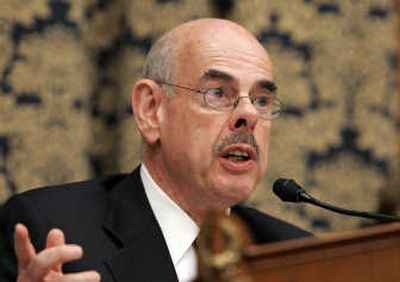
WASHINGTON – Top officials at the Federal Emergency Management Agency knew about – but suppressed – reports of possible health problems from formaldehyde in trailers provided to Hurricane Katrina victims, according to documents released Thursday by a House committee.
The warnings from Gulf Coast field workers were kept quiet because “senior FEMA officials in Washington … didn’t want the moral and legal responsibility to do what they knew had to be done,” said Rep. Henry A. Waxman, D-Calif., chairman of the House Oversight and Government Reform Committee, as he opened a hearing into the agency’s response.
“It’s sickening and the exact opposite of what government should be,” Waxman said. “It is impossible to read the FEMA documents and not be infuriated.”
Documents from the agency’s general counsel advised FEMA officials against agreeing to testing because of the fear of liability for health problems among the 120,000 families who were temporarily housed in the trailers.
About 66,000 households affected by Katrina remain in the trailers at issue.
“Do not initiate any testing until we give the OK,” one FEMA attorney wrote on June 15, 2006, three months after the first news reports appeared about possible formaldehyde-related problems. “Once you get results, and should they indicate some problem, the clock is running on our duty to respond to them.”
Waxman’s frustration toward FEMA was shared by the committee’s top Republican, Rep. Thomas M. Davis III of Virginia, who said the agency “failed to get information they needed and failed to act to prevent this crisis.”
“FEMA’s reaction to the problem was deliberately stunted to bolster the agency’s litigation position,” he said.
Davis said FEMA officials had acted to obstruct an almost yearlong investigation into the allegations by incorrectly invoking attorney-client privilege on most of the 5,000 pages of documents released Thursday. But the agency’s director, R. David Paulison, denied taking a cue from legal counsel when setting agency policy.
“The general counsel does not set policy for this organization,” said Paulison, who joined FEMA as acting director in September 2005 and was confirmed as its chief eight months later. “The health and safety of residents is my primary concern.”
He would not confirm that formaldehyde had contributed to any illnesses, however, and said FEMA trailers would soon be tested for mold, airborne bacteria and more, including formaldehyde.
Formaldehyde is a common component of glues, molded plastics and building materials, including particleboard used in manufactured homes. Symptoms of long-term exposure can include respiratory problems, burning eyes or nose, headaches, bloody noses and rashes. The chemical has been identified by the International Agency for Research on Cancer as a carcinogen in humans.
Committee members argued that FEMA had ample opportunity to test the trailers after about 200 residents lodged complaints referring specifically to formaldehyde.
Agency documents showed that only one inhabited trailer was tested, in April 2006. Its formaldehyde level was measured at 1.2 parts per million, 75 times higher than the maximum workplace exposure level set by the National Institute for Occupational Safety and Health.
FEMA subsequently tested 96 new trailers last fall, but under what Waxman called dubious conditions – their ventilation systems and air conditioners were constantly running and the windows were left open for three weeks before final readings were taken.
Asking individuals to live like that, Waxman noted, was not realistic.
“We recognize that in the summertime on the Gulf Coast, that’s not going to be reasonable,” said Paulison.
Paul Stewart, a former Army officer and one of three trailer residents who testified that they had experienced formaldehyde-related illnesses, said he asked FEMA to test his trailer after the family’s pet cockatiel became ill. When nothing was done after several months, he obtained a test kit from a nonprofit group. He called FEMA with the results, which he said were twice the NIOSH safety standard.
FEMA replaced that trailer with one that was dirty, said Stewart. “They told us it was brand new,” he said. “When I lifted the sheets on the bed, there were bugs crawling around in it.”
Stewart ended up purchasing his own mobile home. He also began helping the Sierra Club test other FEMA trailers, with 30 of 32 testing above the NIOSH standard.
“We have lost a great deal through our dealings with FEMA, not the least of which is our faith in government,” he said.
One committee member, Rep. Diane Watson, D-Calif., told of her own experience with formaldehyde-related problems as a member of the California state Senate. She said the formaldehyde in the carpet glue of her Sacramento office made her violently ill and that she had to move elsewhere.
Watson pushed Paulison to agree not to sell or pass the trailers on to other users if they contained any formaldehyde. Paulison said that as long as the level of the chemical was determined to be safe, he did not see a problem.
“All travel trailers made in America have formaldehyde in them. We’ll at least post something in these trailers to make sure people know they’re not for long-term living,” he said.
FEMA tapped many manufacturers for trailers, and Paulison said he did not know if production problems contributed to contamination.