
Beautiful Calgary

CALGARY, Alberta – I keep expecting drivers behind me to start blaring their horns as I try to exit the parking lot, and the payment machine refuses to accept my bills.
But I hear not a peep, except my own muttered curses. Just as I’m tempted to ram the gate, a man from several cars back gets out and, with a smile, drops several dollar coins into the machine for me.
A fluke? All I know is that later, at a prepay lot, a woman walks to where I’m reading the instructions and hands me her prepaid card, which has hours’ worth of parking on it.
But why shouldn’t people in Calgary be feeling generous and good-natured?
They live in a beautiful, clean and exceptionally prosperous city. Unemployment is virtually nil. Oil and gas money is pouring in so fast that the province of Alberta last year paid off all government debt, invested in infrastructure such as parks and still had so much left over that every man, woman and child was sent a check for $400 Canadian – just for living there.
Calgary’s prosperity, and its opportunities for year-round outdoor activities, has been a magnet for young people. Its average age, 35, makes it the youngest population in Canada.
In three decades, the city’s population has jumped from more than 400,000 to nearly 1 million. Olympic hopefuls come to train at facilities left from the 1988 Winter Games, oil industry types come for high-paying jobs, and others come to take any job that allows them the freedom to pursue outdoor passions in and around the city, best known as the gateway to the Canadian Rockies.
Until arriving here, I figured Calgary would be a Canadian Houston. Both cities started as cow towns, then hit black gold. Yet they couldn’t be more different, says an oil industry executive who visits both cities frequently (and doesn’t want to be identified for fear of offending her Houston colleagues).
“Calgary is not at all like Houston. It’s better designed, more walkable, easier to find your way around and has good public transportation,” she says.
“Calgary is very cosmopolitan,” she adds. “It has lots of boring oil executives like me, but also skateboarders and skiers and people into an alternative lifestyle. People are exceptionally nice – so law-abiding you won’t even see a jaywalker.”
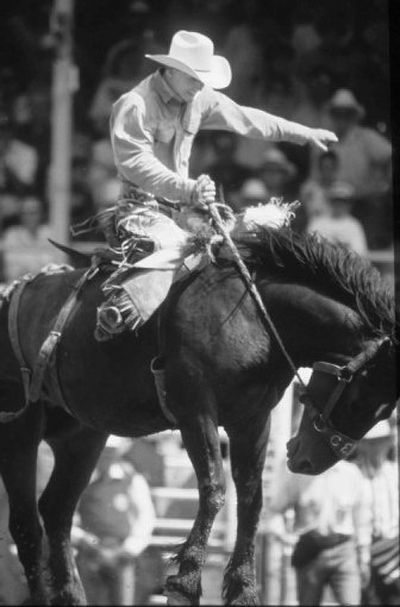
The spirit of the place is captured during the annual Calgary Stampede, a 10-day rodeo that spills into the streets as people party Mardi Gras-style, with cowboy hats instead of beads.
If you’re among the millions planning to visit the Rockies and wondering whether you should tack on extra days to check out Calgary, here are five reasons the answer should be yes.
Outdoor activities: Two clean, glacier-fed rivers, the Bow and the Elbow, wind through Calgary, which was originally settled where the two converge. Depending on the season, you can ice skate and go curling on the rivers or swim, fly-fish and go tubing within view of skyscrapers.
The city, which has 21,000 acres of parkland, is honeycombed with 394 miles of paved pathways, many scraped clean in winter so bicyclists can use them. Along with 161 miles of roadway set aside for bikers on city streets, the biking system is the most extensive of any city in North America.
Calgary has made smart use of the former Winter Games facilities. During my visit, kids were splashing in a fountain at a plaza built for Olympic awards ceremonies. In winter, the fountain becomes a skating rink.
At Canada Olympic Park, I watched bobsledders train for a national championship and for $2 rode on a short indoor track myself – not so thrilling because it’s meant for practicing the push-off, and takes about two seconds. In winter, you can try the real bobsled run and ski the slopes used by Olympic champions. The massive ski jump is for champions only, but you can watch the experts soar.
Shopping: Three times during my visit, I returned to Micah Gallery on Stephen Avenue to think about how great that painted buffalo skull would look in my house if I redecorated in a Southwest motif. I settled for a small whale carved from wood.
Micah’s is one of several galleries selling fine arts and crafts from Canadian Indian tribes. Calgary is also a great stop for leather and fur, including custom-made clothing by the Leather Ranch. Among local companies that make and sell Western wear are the Alberta Boot Co. and Smithbilt, famous for cowboy hats.
Calgary is a shopping mecca in part because it is in the only province in Canada without a provincial sales tax. I happily spent several hours visiting the stores along Stephen Avenue (also called Eighth Avenue), the oldest surviving area of town, where pleasant sandstone buildings line streets closed to cars.
Gone, at least for now, are the days when a strong U.S. dollar could be exchanged for $1.50 Canadian. Still, there are bargains on such Canadian-produced products as leather goods.
Food: Given the reputation of Alberta beef, I was expecting fine steak-and-potato meals. What I hadn’t realized is that Chinese railroad workers settled here a century ago after the tracks they were laying met up with those laid by workers traveling from the east. Thus, Calgary has a vibrant Chinatown, where I found some great dim sum.
Other waves of immigrants have brought their cuisine, giving the restaurant scene an international flair, without the loss of the more indigenous “cowboy food” and big slabs of barbecued meat. Prices are somewhat lower than in major U.S. cities.
Culture: Whenever money flows into a city, the arts are never far behind. The Calgary Philharmonic Orchestra recently welcomed new music director Roberto Minczuk, formerly with the New York Philharmonic and the Sao Paulo State Symphony Orchestra. The Alberta Ballet, which just concluded its 40th anniversary season, is led by Jean Grand-Mantre, who has choreographed works for the most acclaimed companies in Europe.
Then there’s the Calgary Opera, or you could catch a Cantonese opera or learn lion dancing at the Chinese Cultural Centre.
The theater scene is not as established as the music scene, but among the places to find serious, quality productions are Theatre Calgary and Alberta Theatre Projects, which hosts an annual festival of new Canadian works. Average ticket prices around $50.
Special events: My husband has been begging me for years to visit the city during the annual Calgary Folk Music Festival. (Don’t tell him, but this year it’s July 26-29.)
The city has more than the normal number of major events for its size. The Stampede, which this year runs July 6-15, has made Calgary world-famous. But the dressage crowd knows the city for national and international equestrian competitions, which run from February through November.