
A signature moment

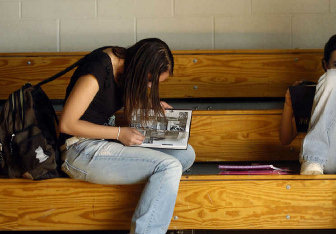
COLORADO SPRINGS, Colo. – OMG: skuls out 4 summer.
So, kids: How will you remember your school year? MySpace? Facebook? Blogs? A digital photo album?
The answer, most likely, is “none of the above.”
In an age when students can transmit pictures and messages to one another in a nanosecond and create a social web on those popular online networking sites, that old high school standby, the hardcover yearbook, is holding strong.
Although CD versions are gaining some ground in yearbook publishing, and MySpace.com pulls in tens of millions of users, high schoolers continue to gravitate to the pages and pages of head shots, clubs, sports and senior superlatives, just as they did 10, 20, even 70 years ago.
“There’s certain aspects of school that don’t change. For example, you’re always going to have a prom queen,” says David Shaver, yearbook adviser at Wasson High School in Colorado Springs, Colo. “I think the high school experience itself hasn’t changed much.”
That’s not to say technology hasn’t swept the yearbook industry. Design is completely handled on computers, and nearly all photos are shot digitally.
“I graduated from high school 12 years ago and even then we were still using grease pencils and doing everything on paper,” Shaver says. “We didn’t use a single roll of film this year.”
But in terms of content, yearbooks cover the same events as always: dances, pep rallies, spirit weeks and football games.
In essence, they serve as a record of the school’s history, says J Miller Adam, yearbook adviser at the Colorado Springs School, a private pre-kindergarten through 12th-grade school.
And, unlike a MySpace or Facebook site, the yearbook freezes a snapshot of an era. The fashion blunders, music scene, hot haircuts, all of the memories – good and bad – you can’t escape.
“The problem with the Web is, you’re always updating it,” Adam says.
Shannon Neill, co-editor of the Mesa Ridge High School yearbook, joined the staff after finding her parents’ yearbooks from 1979 and 1982. The books, she discovered, still held significance to her mom, a high school socialite, and her dad, who “was kind of embarrassed to show me because he was in braces.”
Neill smiles. She’s in braces now.
The teen thinks yearbooks will be “obsolete in 30 years” because of the Internet but says that, for now, the appeal will continue because of those coveted blank pages bound into each book.
“What kids really buy them for is so they can autograph something,” Neill says.
“E-mails get deleted, hard drives can crash, but here you can say, `Look, they signed my book,”’ says Chelsea Olstad, a 17-year-old senior at Mesa Ridge High School. “It’s more personal.”
A small school in West Texas last year released a CD version of its yearbook but quickly reverted to a traditional book after an outcry from parents and students who disliked the CD version, says Taylor Publishing sales representative Jerry Clark. Clark, who has been in the industry for 30 years, hasn’t had another school attempt it.
“We’ve had a push over the past 10 years for video yearbooks and DVD yearbooks, but quite honestly, they’ve always been sold to the school as an addendum copy,” Clark says. “There’s something about going to the shelf and pulling it off.”