
East Valley: Recent graduate learned to adjust

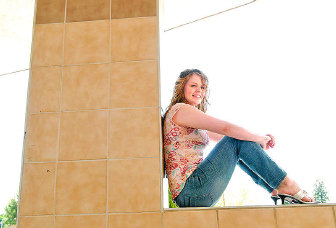
High school is supposed to be something of a shock to incoming freshmen.
But for Lauren Matisin, the shock went deeper.
“I lived in Thailand for 14 1/2 years before coming back here to go to high school,” Matisin said. “Before I got to East Valley, I went to a British boarding school in Bangkok.
“Living over there is different. When I moved here, it was pretty much a culture shock.
“Over there, I was a minority. Over here, not so much.”
So, what was the most shocking thing about going to school at East Valley High School?
“I had never seen so many blondes before in my life,” Matisin said. “You don’t see very many in Thailand.”
“I’m not fluent in Thai, but I speak enough to be able to get around and have a casual conversation,” she continued. “It was a shock to come back here and hear English all the time.”
“And I discovered that the American TV shows I was watching over there were at least a couple of years old over here.”
And, in general, she said, the people are different.
“In Thailand, when you walk down the street, for example, construction workers will talk to you – ‘Hi, be my friend.’ They like to practice their English skills and are friendly.”
Matisin’s father still works in the Thai capital.
“My dad works for a moving company,” she said. “He was born in Paris and his father was in the military, so he moved around quite a bit when he was younger. He was in Singapore before moving to Thailand; my brother was born in Singapore. He had been in Thailand before and knew his way around.”
When it came time to start school, Matisin was sent to a top private school.
The British International School is nothing like a U.S. public school, Matisin said.
“For one thing, it’s a private school,” she said. “Everyone wore a uniform. And since it was a British school, we followed a British curriculum. Over there, you’re constantly being pushed to get the best grades and the best scores. It was a very good school, and it was known for the academics.
“Over here, I still have teachers who push me to get good grades, but it’s a little different. And it felt strange to not wear a uniform at first.”
At one point, 52 nationalities were represented on the faculty and in the student body at Matisin’s school in Thailand. That fostered a broad world view, she says.
“We spent a lot of time on world history and geography,” she said. “And since it was a British school, we did get a lot of British history.”
The same is true of news in Thailand.
“I think a lot of the news we get here is very localized,” she said. “We don’t see a lot of what’s going on in the rest of the world.
“In Thailand, I used to read the Bangkok Post, a newspaper that’s published in English. That paper covered a lot of events going on in the world, so I was exposed to a lot more than we hear about back here.
“It’s not that we’re ignorant of what’s going on in the world here – it’s just that we don’t have an opportunity to experience it,” Matisin said.
One of the biggest differences is in the way education is viewed.
“In Thailand, everyone is supposed to go to school,” Matisin said. “But a lot of families can’t afford to send their kids to school.
“Especially for the poor and average people, going to school is really a privilege. They are required to go to school for nine years, but a lot of them can’t afford it. They have to pay for school supplies, and the schools all have uniforms. Sometimes it’s just too much.
“At our school, we had a special project. We could each sponsor a child and raise money so they could go to school.”
Seeing that on a regular basis gave Matisin a greater appreciation for quality education.
“Over here, we go to school never realizing that there are people in the world who don’t get this kind of opportunity who really want it,” she said.
Matisin will continue her education at Spokane Community College in the fall, but she plans to spend some time with her father in Bangkok first.
“I miss a lot of things there,” she said. “I miss the beaches, the food and especially the shopping.”