
U.S., N. Korea agree on reactor

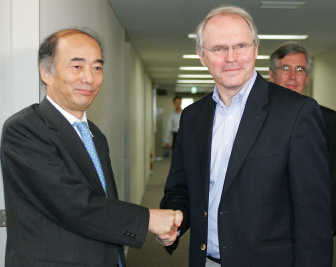
TOKYO – The top U.S. nuclear negotiator arrived in Japan today to discuss his surprise visit to North Korea, which he said yielded an agreement that could lead to a shutdown of the communist state’s plutonium-producing reactor in July.
Christopher Hill – the chief U.S. negotiator at international talks on North Korea’s nuclear programs – said that the Yongbyon reactor would be shut down after the North Koreans and the U.N.’s nuclear watchdog agree on how to monitor the process.
“We expect this to be soon, but probably within three weeks … though I don’t want to be pinned down on a date,” Hill told reporters in Tokyo, after briefing his Japanese counterpart on the outcome of his two-day surprise trip to the North Korea capital.
Hill told U.S. cable broadcaster CNN on Friday that the shutdown could be expected “within two weeks” of the arrival there next week of U.N. inspectors, putting the date sometime in July.
The trip – the first by a high-ranking U.S. official since October 2002 – came amid growing optimism that North Korea may finally be ready to take concrete steps toward fulfilling a promise to dismantle its nuclear programs.
Meanwhile, the North’s state media reported that the country held “comprehensive and productive” discussions with Hill.
Last week, the secretive state invited inspectors from the International Atomic Energy Agency to begin discussions on the procedures for shutting down its Yongbyon reactor. The country expelled the U.N. nuclear inspectors in late 2002.
The IAEA announced earlier this week that a delegation led by Olli Heinonen, a deputy director general of the IAEA, would travel to Pyongyang on Tuesday to prepare for the first inspection.
Hill said he was “happy” that the team was set to go, but cautioned that shutting the reactor was just a first step.
“Shutting down the reactor won’t solve all our problems, but in order to solve our problems we need to make this beginning,” he said. “We really think this is the time to pick up the pace.”