
One father’s war on methadone

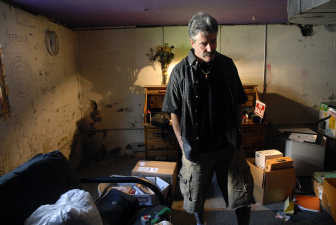
Standing in the dim basement where a methadone overdose killed his son, Ken Zigler prepared to honor Tim’s legacy the only way he knows how.
The 52-year-old Spokane remodeling contractor squared his shoulders, set his jaw and swallowed hard before explaining, yet again, how the common prescription drug is ending more lives than any illicit substance.
“There’s a lot of people that still don’t have a clue,” said Zigler.
Until March 27, 2006, Zigler didn’t know much about the powerful painkiller, either. That changed the morning he found 17-year-old Tim barely breathing after ingesting what Zigler believes was 10 milligrams of methadone the night before.
“His lips were blue, he was unconscious,” recalls Zigler. “I thought, ‘Oh, no.’ “
By the time paramedics arrived, Zigler’s youngest boy was gone.
In the months since then, Zigler has channeled grief into action, becoming a one-man resource on the growing danger of the drug that continues to fuel a rise in overdose deaths in Spokane County.
He speaks to groups of parents and treatment professionals. He packs his truck with bumper stickers and windshield fliers that read: “Methadone is killing innocent Americans.” He talks, again and again, to any young person willing to listen.
It helps Zigler stay connected to the quiet, dark-eyed young man who should have graduated this month from Ferris High School. And it helps him have hope for the future.
“Every day I’ll contact somebody,” Zigler said. “It’s the only way I can justify Tim’s death. It’s the only thing that makes sense. Otherwise, it was for nothing.”
In 2006, the year Tim died, methadone accounted for more deaths than cocaine, methamphetamine and heroin combined, according to records from the Spokane County Medical Examiner’s Office.
Of the 112 people who died from accidental or intentional overdoses in 2006, nearly half – 51 – succumbed to methadone, either alone or in combination with other drugs.
By contrast, records show that cocaine and methamphetamine killed 36 people and heroin just one.
Actual incidents may not be quite as precise as they appear because of the way drugs and deaths are logged, said Dr. Sally Aiken, the medical examiner. But there’s no doubt that deaths from prescription medication overdoses are far outpacing deaths from illicit drugs.
“It’s not declining,” Aiken said.
Although the average age of victims was 41, the drugs did not discriminate. Victims included boys as young as 16, women and men as old as 70, and people of all ages in between – including many who simply didn’t realize that a substance that came from a medicine cabinet could be so dangerous.
“It’s one of the medications where the difference between what works and what kills you isn’t that different,” Aiken said. “Just taking a little too much is significant.”
Overall, the number of drug deaths was up slightly from 2005, when 103 people died of accidental or intentional overdoses and methadone was the primary culprit, according to a report expected to be posted this week on the medical examiner’s Web site.
It’s a trend that’s not new to Spokane drug treatment providers like Tracy Varner, clinical director of Daybreak Drug and Alcohol Treatment.
“We’ve seen a huge shift in prescription drug use in the past two years,” said Varner, whose agency provides inpatient and outpatient services to 1,100 young people annually. “There’s a huge market in Spokane.”
Unlike illicit drugs like methamphetamine, cocaine and heroin, methadone and other opiates are easily accessible and fairly cheap – about $60 to $70 for an 80-milligram pill.
“They can chop that bad boy up,” Varner said. “That’ll keep them high for days.”
Getting the drugs is no problem, even for the 12-year-old Varner admitted to her program last week. Younger users take pills from their parents’ medicine cabinets. Older kids buy them from sources who benefit from what some say are lax habits among doctors who over-prescribe painkillers, sometimes out of ignorance, sometimes intentionally.
“The biggest problem in this community is the diversion,” said Aiken. “It’s not being used by the person it’s prescribed for.”
And it’s not being used by people who fit any expected profile for drug abuse, she added. Users span income, occupation and geography, often showing up in rural areas rather than urban centers. Utah, for instance, is reporting a growing prescription overdose problem, Aiken noted.
“The people that are dying from methadone aren’t hard-core drug users,” she said. “In our society, people think prescription medications are OK.”
While all prescription drugs should be taken as directed, methadone is especially dangerous in unskilled hands. Unlike some opiates, it takes longer to have an effect, and it accumulates in the system with what experts call a longer “half-life.”
That means people hoping to relieve pain or achieve a high may take more and more of the drug because they don’t see an immediate reaction. By the time it takes full effect, it may be too late. Methadone kills primarily by slowing respiration, overriding the body’s instinct to breathe.
The trouble, said Varner, is that too few users recognize the danger.
“A lot of people who use drugs don’t know about half-life,” she said.
Tim Zigler had his share of struggles, his father said. The boy lost his mother to cancer when he was 4 and grew up close to his dad. Two years ago, Ken Zigler married his former sister-in-law, Stephanie, who had known Tim since he was a baby.
Tim was a quiet kid and an even quieter young man who got steady, if not sterling, grades and favored shop classes in school. He worked hard at his job in the housekeeping department at Spokane Valley Mall, mostly to afford payments on the green Honda Civic that was his pride.
Ken Zigler said his son, like many teens, smoked marijuana and experimented with alcohol. But he didn’t use more potent drugs, his father said. That’s why he was so sensitive to the low dose of methadone he ingested before he died. The fatal drug came, Zigler said, from a pretty and persistent girl Tim Zigler met at high school. Stephanie C. Davis was 16 when she was charged with homicide by drug abuse in Spokane County juvenile court in May 2006.
The girl was mandated to drug court last fall, with the understanding that if she failed to stay off drugs, graduate from high school and meet other requirements, she would face a bench trial based on her confessions to police. In January, she was sentenced to five days detention for testing positive for marijuana and not showing up for required drug tests.
A few months after the court hearing, Zigler said he saw the girl in the middle of a Spokane street, making obscene gestures at passing cars.
“It upsets me very much,” Zigler said. “That was part of the agreement in the courtroom that day. This was supposed to have been to get them straight.”
“Them” includes Stephanie’s mother, Sharon Arger, 42, of Spokane, who said she is disabled by severe back pain. Zigler’s lawyer, Jeffrey R. Smith, of Spokane, said Zigler is considering filing a civil lawsuit alleging wrongful death. Investigators are working to determine the source of the drugs that killed Tim, Smith said.
Arger said Zigler and his lawyer believe Stephanie got the drugs from Arger’s cache of pain medication. But that’s not true, said Arger. Stephanie did supply Tim with methadone, she acknowledged, but the girl got it from someone else.
“Everything was locked up. It wasn’t mine,” said Arger, who’s also the mother of 5-year-old twins and a 2-year-old son. “I’m not this negligent person.”
Stephanie has since posted dozens of clean drug tests and completed a General Equivalency Diploma, her mother said. Stephanie is “doing great,” said Arger, who added she regrets that court rules have kept her from talking to Ken Zigler.
“I can’t even say I’m sorry. I can’t tell them who I am,” she said. “I wanted to talk to them and I couldn’t.”
The only thing close to an apology came June 15, when Stephanie Davis was ordered to pay Zigler $2,310.64 in restitution, court records show.
“That was the cost of Tim’s medical care and burial,” Ken Zigler said quietly.
Zigler said he takes what comfort he can from the kids he’s able to reach, young people in drug diversion programs who have a chance to make better choices.
“I’m hoping that I am personally touching kids’ lives,” he said.
Meanwhile, he’s packing up the basement room of the rented home where Tim inked the names of his favorite bands – Metallica, Tool, Led Zeppelin – on the wall. For more than a year, Zigler couldn’t bear to disturb anything. Now, he can’t wait to pack it up and move on.
“We’ve got to get out of here,” he said. “He would have been graduating. I feel like I’m saying, ‘It’s time to go, Tim.’”
The larger furniture went to a recycling center, where Zigler would be sure not to come across it. Smaller mementos of Tim’s life are being packed into boxes.
One thing Zigler hasn’t touched is a string of multicolored Christmas lights that Tim strung between two posts. Some of the bulbs are missing; several have burned out. But a few still glow.
“They’ve been going for a year and a half,” the father said, his square shoulders slumping for just a moment.
“I just can’t shut them off.”